
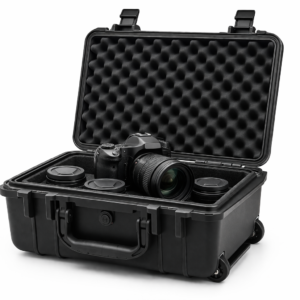
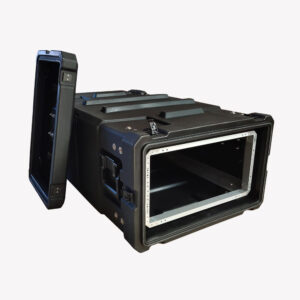

The Zarges aluminium case is one of the most recognisable pieces of equipment in the British military logistics chain. Robust, lightweight for its strength, and built to last decades rather than years, a British military Zarges aluminium case represents exceptional value when it reaches the surplus market. If you are looking for a Zarges aluminium case UK buyers can trust, understanding what makes these cases special — and what to look for when buying surplus — will help you make the right call.
Browse British Military Zarges Cases
Military-sourced, individually inspected, and accurately described. Fast UK dispatch.
What Is a Zarges Case?
Zarges is a German manufacturer founded in 1933, originally specialising in aluminium ladders before expanding into transport cases, containers, and storage systems. Their cases are built from high-grade aluminium alloy using an extrusion process that produces extremely rigid panels with a distinctive ribbed profile. The corner joints are precision-engineered and riveted, producing a box that maintains its geometry even under significant load. The result is a case that is lighter than steel, stiffer than most plastics, and far more durable than standard commercial transit cases.
Unlike many case manufacturers who moved to injection-moulded plastics, Zarges has continued to build in aluminium because the material genuinely outperforms plastic in several key areas: dimensional stability under heat, resistance to UV degradation, and the ability to stack under heavy loads without deforming. These properties made Zarges the preferred supplier to European military forces and a lasting fixture in British logistics for over 40 years.
Why Did the British Military Choose Zarges?
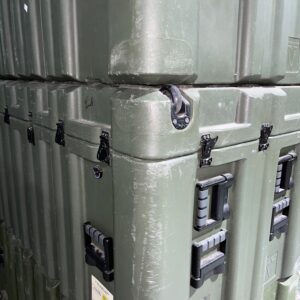
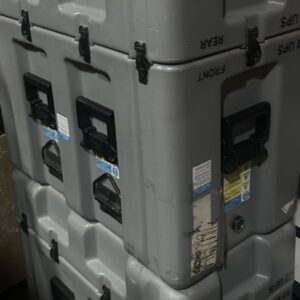
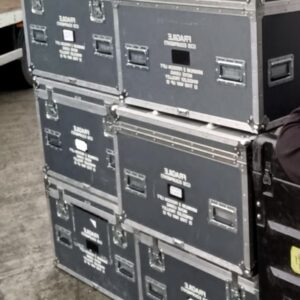
The British Armed Forces have used Zarges cases extensively for decades, particularly the K470 series and larger K410 transport containers. Their appeal is straightforward: aluminium construction offers an excellent strength-to-weight ratio, resistance to corrosion in wet and humid environments, and dimensional stability that plastic cases cannot always match under heat or crushing loads.
Zarges cases are stackable, which matters enormously in military logistics where space in vehicles and aircraft is at a premium. Uniform external dimensions mean they tessellate efficiently in cargo holds and truck beds, maximising usable space. They are also repairable in the field — a bent panel or damaged latch can be replaced without specialist tools, which is not something you can say about most injection-moulded plastic cases. When a case needs to function reliably for 20 years across multiple deployments, repairability is not a minor consideration.
Zarges Model Comparison: K470, K410, and K437
Three Zarges models appear most frequently in British military surplus. Understanding the differences helps you choose the right one for your application.
| Model | External Dimensions (approx.) | Weight (empty) | Best Use |
|---|---|---|---|
| K470 | 600 × 400 × 320mm | ~7 kg | General military stores, tools, instruments — the most versatile mid-size case |
| K410 | 800 × 600 × 420mm | ~11 kg | Large equipment transport, overland vehicle storage, bulk logistics |
| K437 | 560 × 360 × 220mm | ~5 kg | Smaller instruments and electronics — compact profile fits aircraft overhead bins |
The K470 is the most commonly found in UK military surplus and the model most buyers are looking for. The K410 is the larger transport container and suits buyers who need maximum internal volume. The K437 is the compact option, popular with travellers and photographers who need solid protection in a smaller footprint.
Who Buys British Military Zarges Cases?
Expedition and overland travellers are among the most enthusiastic buyers, using Zarges cases as vehicle storage, tool boxes, and secure lockers for camping equipment. Fitted to roof racks or in the back of a Land Rover, a K470 provides organised, weatherproof storage that outlasts any plastic equivalent.
Photographers and film crews value the aluminium construction for outdoor shoots where a plastic case would be at risk from heat and UV degradation. On extended outdoor shoots, aluminium cases also stay cooler in direct sunlight than dark-coloured plastic alternatives.
Industrial and engineering businesses use them as rugged site cases for tools, instruments, and sampling equipment. A Zarges case on a construction site or a research vessel will outlast multiple generations of plastic cases in the same role.
Collectors and militaria enthusiasts seek them out as authentic pieces of British military kit. Many come with military stencilling, NSN markings, and unit markings that tell the story of their service history.
What to Check When Buying a Surplus Zarges Case
Aluminium cases show their history differently to plastic ones. Surface marks and scratches are universal on surplus Zarges cases and carry no functional significance — the aluminium is thick enough that surface scratches do not affect structural integrity. What matters is the corner joints: check that all rivets are tight and no panels have separated at the corners. Latches and hinges should operate smoothly. On older cases the latches can stiffen from corrosion, but this is usually resolvable with a little lubrication.
The base should be flat with no significant denting that would prevent the case from stacking correctly — this is the most important structural check on any surplus Zarges. Interior condition varies: some cases will be bare aluminium inside, others will have foam lining, depending on their original military application. Foam can be replaced inexpensively if needed, so do not let a worn interior put you off an otherwise sound case.
On larger transport containers such as the K410, also inspect the lid seal if present — some military Zarges variants have a rubber gasket for weather resistance. If the gasket has hardened or cracked, replacements are available from Zarges directly or via specialist suppliers.
Zarges Cases vs Plastic Alternatives
The choice between aluminium Zarges cases and plastic alternatives such as Peli or Nanuk comes down to the application. Plastic cases generally offer better waterproofing (moulded O-ring seals versus fitted lids), and they are lighter at smaller sizes. Zarges cases have the advantage in long-term dimensional stability, stackability, and repairability. They are also easier to customise — aluminium can be drilled, fitted with additional hardware, and painted without the specialist processes that plastic requires.
For overland travel, industrial use, and general logistics where a consistent external footprint matters, Zarges remains the better choice. For camera equipment and precision instruments where IP67 waterproofing is the primary requirement, a sealed Peli case may suit better. Many buyers who know both products end up owning both.
Frequently Asked Questions
Are British military Zarges cases waterproof?
Standard Zarges K470 and K410 cases are water-resistant but not fully waterproof. The close-fitting aluminium lid provides protection against rain and splashing, but they do not carry an IP67 rating like a sealed Peli case. Some military variants were fitted with rubber gaskets for improved weather resistance. If full waterproofing is essential, pair a Zarges case with dry bags inside, or consider a sealed Peli case for that application.
What is the difference between a Zarges K470 and K410?
The K470 is the standard mid-size military Zarges case, measuring approximately 600 × 400 × 320mm externally. The K410 is larger — approximately 800 × 600 × 420mm — and was used for larger equipment and bulk stores transport. Both models use the same riveted aluminium panel construction, but the K410 is considerably heavier and bulkier. The K470 is far more commonly found in UK military surplus.
Can I get replacement latches and hinges for a Zarges case?
Yes. Zarges produces spare parts for their cases, including latches, hinges, handles, and corner brackets. UK Zarges distributors can supply these parts, and some are also available through specialist military surplus and case suppliers. This repairability is one of the key advantages of the Zarges design — a latch replacement on a 20-year-old case is straightforward and inexpensive.
How much does a British military Zarges case cost on the surplus market?
Prices vary depending on condition, size, and how much military provenance is retained. A used K470 in good condition typically sells for between £40 and £100, depending on the seller and condition grade. New equivalent Zarges cases retail at significantly higher prices — the surplus market offers genuine savings of 50–75% on what you would pay for a comparable new case. Larger K410 containers are less common and command higher prices when available.
Ready to Find Your Zarges Case?
We stock British military Zarges aluminium cases sourced directly from UK disposals — individually inspected and accurately graded. Stock moves fast, so check what’s available today.
✓ All cases pre-inspected
✓ Accurate condition descriptions
Can’t find what you need? Get in touch