
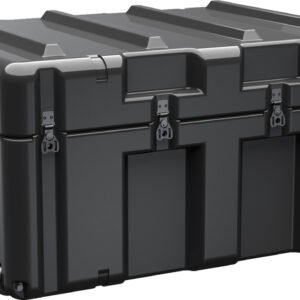
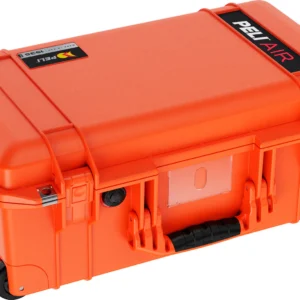
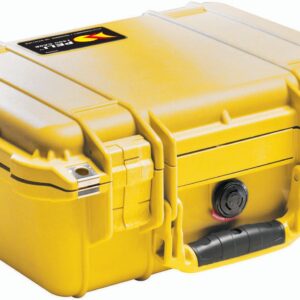
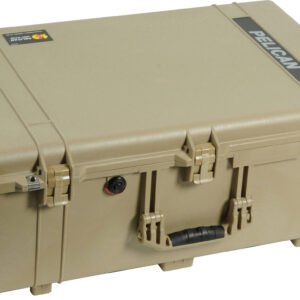
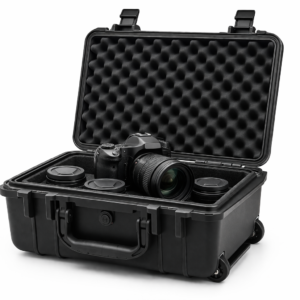
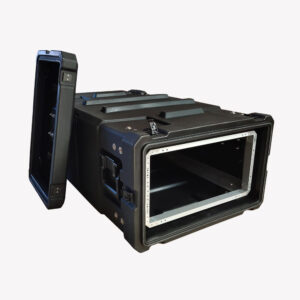

If you’ve ever opened a hard case to find your kit rattling around inside, you’ll know the frustration. A premium protective case — Peli, Hardigg, or a military-grade flight case — is only as good as the foam that holds your gear in place. Get the foam wrong and you’ve spent serious money on a case that doesn’t actually do its job.
Custom foam inserts are the difference between a case that genuinely protects your equipment and one that merely encloses it. Whether you’re casing up a camera body, a set of lenses, a drone, specialist tools, or sensitive electronics, a properly cut foam insert ensures your kit sits securely, travels safely, and arrives in exactly the condition it left in.
Here’s what you need to know before ordering a custom foam insert for your case in the UK.
What Does a Custom Foam Insert Actually Do?
Standard cases ship with either solid foam, pre-scored pick-and-pluck foam, or no foam at all. Pick-and-pluck foam is a reasonable starting point — you tear out cubes to approximate the shape of your gear — but the results are rarely precise, the edges stay jagged, and anything with an awkward profile fits poorly or shifts in transit.
A custom foam insert is cut to the exact profile of your equipment. A CNC cutter or a skilled hand cutter removes foam to the precise dimensions, depth, and shape of each item, creating a snug, tailored pocket that eliminates movement entirely. For delicate, expensive, or mission-critical equipment, that level of precision isn’t a luxury — it’s the whole point of buying a hard case in the first place.
Which Foam Type Is Right for Your Equipment?
Foam isn’t one-size-fits-all, and choosing the wrong type can be just as damaging as a poor cut. The three most common types used in custom case inserts are:
Polyethylene (PE) foam is firm, durable, and moisture-resistant. It’s the standard choice for heavy tools, firearms, and robust equipment. It holds its shape under repeated use and handles impact well without compressing over time.
Polyurethane (PU) foam is softer and more flexible, making it better suited to lighter or more fragile items — camera lenses, medical instruments, precision optics. It conforms gently around delicate surfaces without placing stress on vulnerable points.
Anti-static foam (typically charcoal grey or pink) is essential for electronics, circuit boards, and anything sensitive to electrostatic discharge. If you’re casing up electronic components with standard foam, you risk damage you won’t see until it’s too late.
Getting the foam specification right matters as much as getting the cut right. A good supplier will guide you through the choice based on what you’re protecting and how the case is being used — transport, storage, or both.
What to Look for in a Custom Foam Cutting Service
Not all foam cutting services are equal. A few things worth confirming before you commit:
Precision measurements, not guesswork. The best services ask for exact internal case dimensions and precise equipment measurements. If a supplier is comfortable cutting from rough estimates, expect rough results. Bring a tape measure, get accurate numbers, and don’t approximate.
Multiple items in a single insert. A quality service will lay out multiple items efficiently in one insert — each item in its own snug pocket, with no wasted space and no risk of items shifting into each other during transit.
Case compatibility. If you’re buying a case and foam together, the supplier should cut to the case’s actual internal dimensions, accounting for ridges, lid foam, and any irregular internal profiles. Generic “universal fit” inserts rarely account for these properly.
Material choice. PE, PU, anti-static — a serious supplier offers all three and will advise on the right choice for your application. If they only stock one foam type, that’s a limitation worth knowing about upfront.
Getting Your Case and Custom Foam From One Place
The simplest way to get a custom foam insert right is to source the case and the foam cutting from the same supplier. The internal dimensions are already known, there’s no measuring uncertainty between supplier and case, and the team cutting the foam can advise based on exactly what the case can accommodate.
At Surplus Cases, we supply ex-military and surplus Peli, Hardigg, and flight cases — and we offer custom foam cutting to fit whatever you’re protecting. Our team cuts to your exact specifications, whether that’s a single instrument or a multi-item loadout, using PE, PU, or anti-static foam as appropriate for your gear.
If you’ve got a case already — or you’re looking for one — get in touch to discuss your custom foam insert requirements. We’ll take care of the rest.