

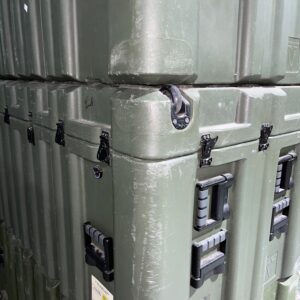
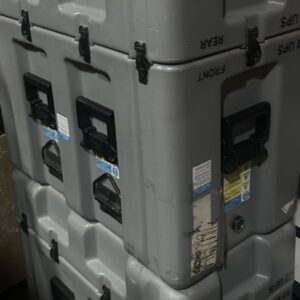
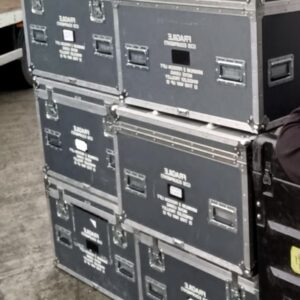
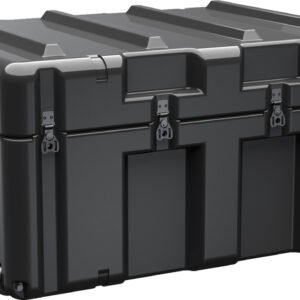
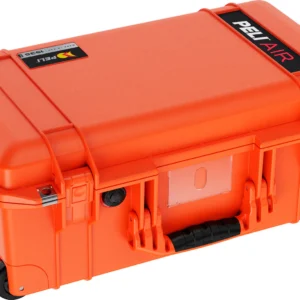
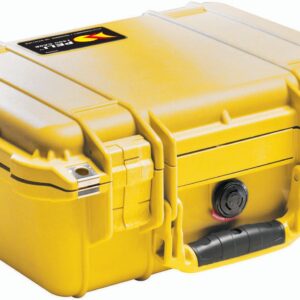
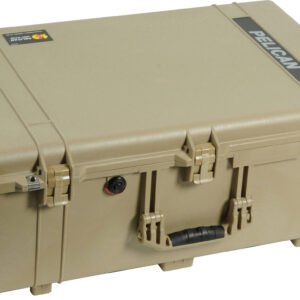
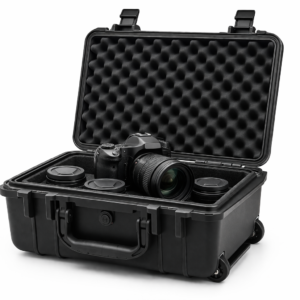
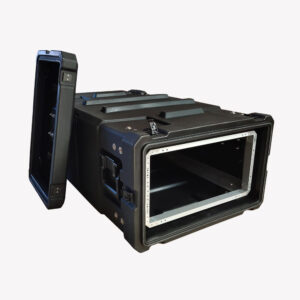

If you know, you know. The name Hardigg carries a certain weight among anyone who has handled serious military equipment. These rotomoulded cases — originally manufactured by Hardigg Industries of South Deerfield, Massachusetts — became the gold standard for military protective packaging for good reason. And in the UK surplus market, genuine Hardigg cases remain some of the most sought-after pieces of kit available.
This guide covers everything you need to know before buying a Hardigg case in the UK: the history, what makes them special, how to identify a genuine one, and where to find good surplus stock.
A Brief History of Hardigg Cases
Hardigg Industries was founded in 1959 and quickly established itself as the premier manufacturer of rotomoulded protective cases for the US military. The company’s relationship with the Department of Defense was long and deep — Hardigg cases were specified across virtually every branch of the US armed forces, from the Army and Marines to the Navy and Air Force, and were widely adopted by NATO allies including the British military.
In 2000, Hardigg merged with Pelican Products, creating the Pelican-Hardigg brand. The military division continued producing cases under the Hardigg name, with the civilian line rebranded under Pelican. Today, many of the rotomoulded case designs Pelican sells to civilians have direct lineage to Hardigg military specifications — but the surplus originals remain notably more robust, often featuring heavier hardware and more substantial wall thickness than their retail descendants.
What Makes Hardigg Cases Different?
The short answer: military specification demands it.
When the US or British government procures a case, the specification covers impact resistance, temperature range, waterproofing, and long-term seal integrity to a degree that consumer product standards don’t approach. Hardigg cases were typically built to MIL-SPEC-4840 or equivalent standards, which dictate everything from minimum wall thickness to the performance of the latching system under load.
Rotomoulded Construction
Rotational moulding produces a single, seamless shell with no weak points where panels join. The polymer — typically high-density polyethylene — is heated and rotated simultaneously, creating uniform wall thickness throughout. The result is a case that can be dropped, crushed, submerged, and frozen without deforming or cracking. This is fundamentally different from injection moulding, which creates a case from separate pieces bonded together — and which will always have potential failure points at those joins.
Military-Grade Hardware
The latches, hinges, and hasp systems on a Hardigg case are substantially heavier-duty than those found on civilian equivalents. Stainless steel or heavy-gauge zinc hardware was standard, designed to survive repeated cycling in field conditions without loosening, corroding, or failing under load. When you compare the satisfying snap of a Hardigg latch against a budget consumer case, the difference is immediately apparent.
Automatic Pressure Equalisation Valves
Most Hardigg military cases include automatic pressure equalisation valves — a feature that prevents the case from becoming impossible to open after changes in altitude (such as air transport) while maintaining the watertight seal at ground level. This is standard on military hardware. On civilian cases, it’s often an expensive optional extra — or simply absent.
Stacking and Integration Design
Military logistics demands that cases stack securely on pallets, in vehicles, and in storage racks. Hardigg cases feature integrated stacking geometry — lid recesses, base footprints, and compatible external dimensions that allow them to be secured and stacked without improvised rigging. If you’re running a multi-case operation, this matters enormously.
Common Hardigg Case Formats in the UK Market
Hardigg produced hundreds of specific models across sixty years of military production. Several formats are particularly common in UK surplus stock:
Small Transit Cases
Compact cases originally used for radio handsets, first aid kits, and sensitive electronic components. In civilian use, these are ideal for photographers carrying prime lenses, drone pilots storing battery packs, tradespeople with precision instruments, or anyone who needs a genuinely tough case for smaller, high-value items.
Medium Equipment Cases
Perhaps the most versatile format — large enough to carry a full camera body with multiple lenses, or a complete drone with accessories, but compact enough to manage single-handed. Many of our most popular Hardigg cases fall into this category, and they tend to sell quickly when good stock arrives.
Large System Cases
Designed for crew-served weapons, communications equipment, or medical systems. In civilian use, these are ideal for large-format photography equipment, audio production gear, surveying instruments, or any situation requiring a genuinely large, rugged transit solution that a consumer case simply cannot provide.
How to Identify a Genuine Hardigg Case
Not everything labelled “military surplus” deserves the description. When evaluating a Hardigg case in the UK market, look for the following:
- Moulded branding — genuine Hardigg cases have the manufacturer name moulded into the shell, not just printed or stickered on
- NSN markings — National Stock Numbers (NSN) stencilled or plated onto the case confirm genuine military procurement
- Heavy hardware — the latches should feel substantial; real metal, not lightweight alloy
- Continuous perimeter seal — the gasket should be a single, unbroken piece of dense closed-cell foam or rubber, properly seated in its channel
- Pressure valve — look for the automatic vent valve, typically on the front face below the latch line
At Surplus Cases, every Hardigg case we sell is the real thing — sourced from verified government surplus channels, not grey market reproductions or far-east copies.
Hardigg vs. Pelican: What’s the Practical Difference?
This question comes up regularly. Since the 2000 merger, civilian Pelican cases and military Hardigg cases have shared common heritage. But in ex-surplus stock, the practical differences are clear:
- Specification — Hardigg cases were built to military spec; Pelican civilian cases are built to civilian spec. The former is typically more demanding in terms of materials and hardware.
- Price — Surplus Hardigg cases are almost always significantly cheaper than equivalent new Pelican cases, even accounting for their used condition.
- Provenance — A genuine ex-military Hardigg case has verifiable history and known specification. The “Pelican alternative” you find on a marketplace has neither.
For a broader look at how ex-military cases compare to new civilian alternatives, see our guide to Pelican case alternatives in the UK.
Buying Hardigg Cases in the UK: Practical Advice
Availability in the UK market varies — Hardigg cases tend to come in batches as MoD and NATO disposal programmes release stock. Our practical advice:
- Check dimensions carefully — Hardigg produced cases in US measurements; our listings include both internal and external metric dimensions so you can compare directly
- Inspect foam condition — original foam may be hardened or compressed with age; budget for replacement cubed or convoluted foam if you need a snug, protective fit for new equipment
- Act when stock is available — popular sizes sell quickly and may not reappear for months; if you see the size you need, don’t wait
- Check the grading — our army surplus grading guide explains exactly what Grade 1 and Grade 2 mean in practice
Grade 1 Hardigg cases in popular sizes are among our fastest-moving stock. If you have a specific requirement, it’s worth contacting us — we can notify you when suitable stock arrives.
Find Your Hardigg Case
We maintain a regularly updated stock of genuine surplus Hardigg cases in the UK, across multiple sizes and configurations. Every case is individually photographed, measured, and graded before listing. No guesswork, no mystery dimensions, no misrepresented condition.
If you’re serious about protection, there’s nothing quite like a Hardigg. Browse all Hardigg cases currently in stock →