

Choosing the right waterproof equipment case can be genuinely confusing. IP ratings, MIL-SPEC standards, brand names, and conflicting claims make it difficult to know what you actually need — and what you are paying for. This guide cuts through the noise and explains what to look for when selecting the best waterproof equipment case for UK buyers, including why military surplus options deserve serious consideration alongside new commercial alternatives.
IP67-Rated Waterproof Cases from UK Military Surplus
Military-sourced, individually inspected, and accurately described. Fast UK dispatch.
Understanding Waterproof Ratings
The IP (Ingress Protection) rating system is the most widely used standard for waterproofing. It is defined by the international standard IEC 60529 and consists of two digits: the first covers protection against solids (dust), and the second covers protection against liquids (water). When buying a waterproof equipment case, it is the second digit that matters most.
MIL-SPEC standards — particularly MIL-STD-810 — test for a broader range of environmental factors including altitude, temperature extremes, vibration, shock, and humidity, in addition to water resistance. A MIL-SPEC rating is generally more demanding than a simple IP rating and indicates a case that has been validated across the full range of real-world stresses that military equipment encounters in the field.
IP Ratings Explained
| IP Rating | Water Protection Level | Suitable For |
|---|---|---|
| IPX4 | Splash-resistant from any direction | Light rain, incidental splashing — not adequate for heavy use |
| IP65 | Protected against water jets from any direction | Heavy rain, pressure washing — good weather protection, not for submersion |
| IP67 | Submersible to 1 metre for 30 minutes | River crossings, submersion, driving rain, field use — the standard for serious cases |
| IP68 | Submersible beyond 1 metre (manufacturer specifies depth) | Diving, extended submersion — beyond the requirement of most equipment cases |
For the majority of equipment case applications — field work, overlanding, photography, drone operation — IP67 is the appropriate standard. It covers river crossings, prolonged rain, accidental submersion in puddles or shallow water, and wet vehicle load areas. IP68 is rarely necessary for cases; it is more relevant for submersible electronics and diving equipment.
Types of Waterproof Equipment Cases
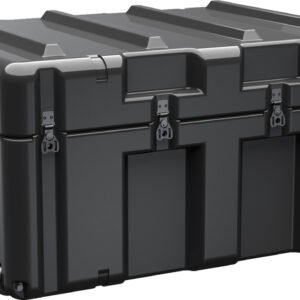
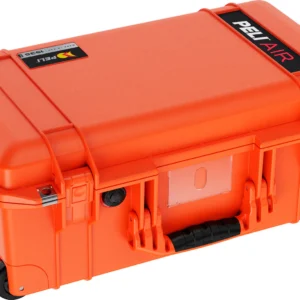
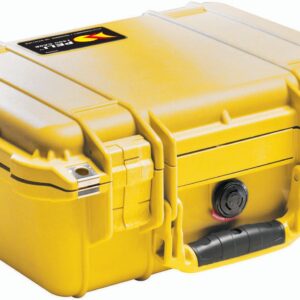
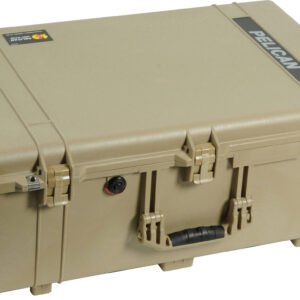
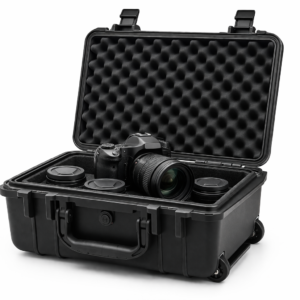
Hard shell polymer cases such as those made by Peli are the most popular choice for equipment that needs both waterproofing and crush protection. The rigid shell protects against impacts and loads, while the O-ring seal keeps water out to IP67. These cases are available across a very wide size range and are the benchmark against which other waterproof cases are measured.
Aluminium cases such as Zarges offer excellent weather resistance and are stiffer than plastic at high temperatures, making them well suited to hot climates and roof rack mounting. They are not generally rated to IP67 without additional sealing, but they provide a high level of protection against rain, dust, and moisture. The open interior is well suited to bulky or irregularly shaped items that foam-lined cases cannot easily accommodate.
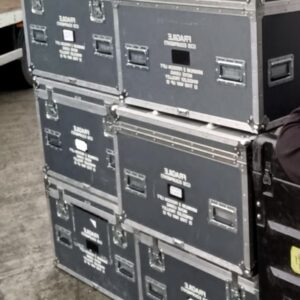
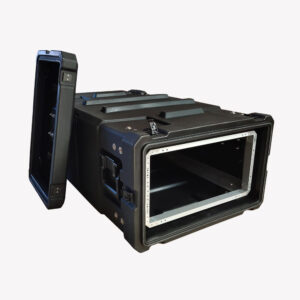
Military flight cases use plywood and aluminium construction with weather-resistant seals. They are highly resistant to rain and dust, but not designed for submersion. Their major advantage is internal volume — large flight cases can carry substantially more than polymer cases of the same external footprint, and their reinforced construction means they survive rough vehicle transport well.
Key Factors to Consider
Internal dimensions matter more than external ones. Measure your equipment carefully and add clearance for foam on all sides before selecting a case size — a case that is marginally too small is useless. Most Peli cases list both internal and external dimensions; always work from the internal figure.
Weight is a practical consideration, particularly for cases that will be carried or shipped frequently. There is often a trade-off between robustness and weight: the heaviest cases are also the most rugged, but that matters less for vehicle-based use than for carrying cases through airports or on foot.
Pressure equalisation is important for cases that will be used at altitude or transported by air. Without a pressure equalisation valve, a case sealed at sea level can become very difficult or impossible to open after a flight or a long ascent. All Peli cases include an automatic valve as standard; check for this feature when buying surplus.
Foam type affects both protection and flexibility. Pick-and-pluck foam allows custom fitting to your equipment; replacement foam sets are available for all major Peli models. Layered foam (a solid base with a separate pick-and-pluck top layer) offers the most versatile configuration. Pre-cut foam for specific equipment is also available from specialist foam suppliers.
Why Military Surplus Cases Are Worth Considering
Military surplus cases offer waterproof protection to the same standard as new commercial cases, at a fraction of the retail price. Cases like the Peli 1620 were originally built to exceed civilian commercial standards — they are subjected to MIL-STD-810 testing that covers shock, vibration, altitude, temperature, and humidity in addition to IP67 water resistance. That capability does not diminish with age when the case has been properly stored.
Surplus cases from reputable dealers are inspected before sale, so you know exactly what condition you are getting. For buyers who need proven waterproof protection without paying full retail — for field cameras, survey equipment, drones, medical kit, or electronics — surplus is a logical and cost-effective choice. The savings compared to new retail are typically 40–65%.
Matching Case Type to Your Equipment
For cameras and photographic equipment: a Peli case with pick-and-pluck foam is the standard choice. The foam protects against vibration damage as well as impact, and the IP67 seal keeps moisture out during travel and outdoor use. A Peli 1510 or 1520 handles a DSLR body with several lenses; the 1620 suits larger cinema or broadcast setups.
For drones: the key dimensions are wingspan or rotor-to-rotor span with props folded, plus the controller dimensions. Most compact drones fit a Peli 1510 or 1560; larger commercial drones may need a 1620 or a dedicated flight case. Foam configuration is critical — allow space for the drone body, battery, controller, and cables.
For tools and field equipment: Zarges aluminium cases or military flight cases offer better flexibility than foam-lined polymer cases for irregularly shaped tools. The open interior accommodates a wider variety of configurations, and the cases are easy to adapt with dividers, trays, or brackets.
Frequently Asked Questions
What IP rating do I actually need for a waterproof equipment case?
For most field, outdoor, and travel applications, IP67 is the appropriate standard. It covers submersion to one metre for 30 minutes, which handles river crossings, wet vehicle storage, and any realistic accidental submersion scenario. IPX4 or IP65 cases are adequate for light rain but should not be considered truly waterproof for serious field use. IP68 goes beyond what most equipment cases need — it is primarily relevant for diving and extended underwater applications.
Do military surplus Peli cases still meet IP67 after years of use?
Yes, provided the O-ring seal is in good condition. The IP67 rating of a Peli case depends almost entirely on the neoprene O-ring seal around the lid, which is a replaceable consumable part. A good surplus dealer will check seal integrity before listing. If you want to verify it yourself, submerge the closed case (with paper inside) to 30 cm for 10 minutes and check for moisture. Replacement seals cost a few pounds and fit without tools.
What is MIL-SPEC and does it matter for civilian buyers?
MIL-SPEC refers to US military specifications — most commonly MIL-STD-810 for environmental testing. This standard tests equipment against shock, vibration, altitude, temperature extremes, humidity, salt fog, and water immersion across a series of laboratory procedures. For civilian buyers, a MIL-STD-810 rated case provides confidence that it has been tested against a wide range of real-world stresses beyond IP water resistance alone. Most quality Peli cases meet MIL-STD-810 requirements, which is why they are procured by military and government organisations worldwide.
Are waterproof cases safe for air travel?
Yes, with one important caveat: the case must have a pressure equalisation valve. Without one, a case sealed at sea level will have lower internal pressure than the outside at altitude, making the lid very difficult to open on landing. Peli cases include an automatic pressure equalisation valve as standard — a small button-like fitting on the case side that allows pressure to equalise without compromising the waterproof seal. Check that this valve is present and moves freely before travelling by air with any surplus case.
Ready to Find Your Case?
We stock IP67-rated and MIL-SPEC tested waterproof cases from UK military surplus — all individually inspected and accurately described, with fast UK dispatch.
✓ All cases pre-inspected
✓ Accurate condition descriptions
Can’t find what you need? Get in touch