

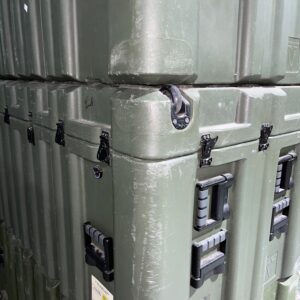
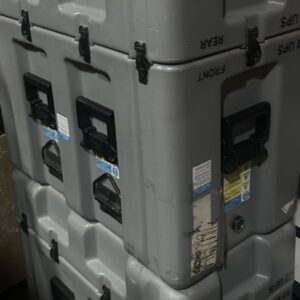
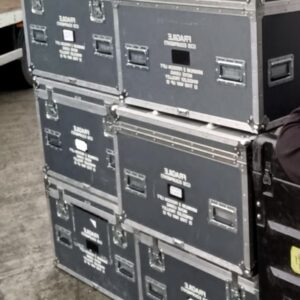
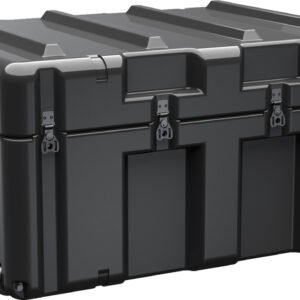
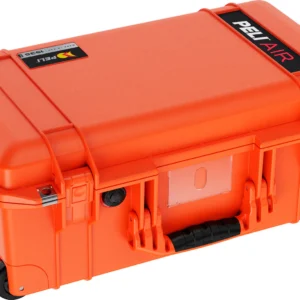
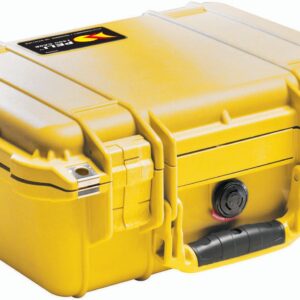
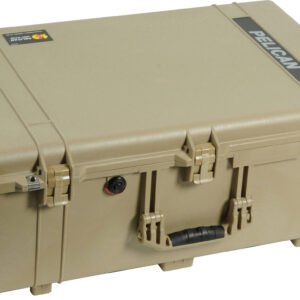
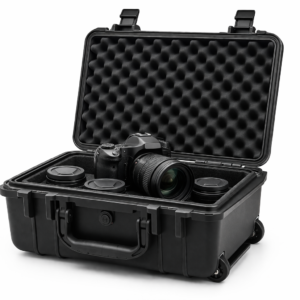
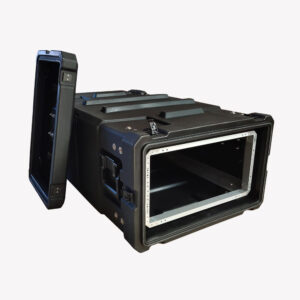

A properly cut foam insert for a Peli case is the difference between equipment that arrives intact and kit that rattles, shifts under impact, and suffers damage it should never see. Sourcing the right foam insert for a Peli case in the UK — whether you need Pick N Pluck replacement foam, custom-cut closed-cell polyethylene, or an anti-static solution for sensitive electronics — is more straightforward than most buyers assume. Ex-military hard cases sourced from MoD disposal frequently arrive with worn, compressed, or missing foam: the polypropylene shell remains serviceable for decades, but original inserts often exhaust their working life after years of operational use. This guide covers every foam type used in Peli and ex-military cases, the four cutting methods available to UK buyers ranging from a craft knife to a CNC routing service, how to choose the right foam density for your equipment, and how to assess an existing insert before deciding whether to replace or recut it.
Browse Ex-Military Cases from UK Military Surplus
Military-sourced, individually inspected, and accurately described. Fast UK dispatch.
Foam Types Used in Peli and Ex-Military Cases
Standard Peli cases ship from the factory with one of two foam configurations: solid closed-cell foam (a single-piece layer requiring hand cutting) or Pick N Pluck (a pre-scored polyethylene grid configured by removing individual cubes). Ex-military cases leave service with either worn original foam or replacement material fitted during service life — which may be solid PE, soft PU, or anti-static foam depending on the case’s operational role. Getting the foam type right matters as much as getting the cut right.
Closed-Cell Polyethylene (PE) Foam
PE foam is the standard material in Peli and Hardigg cases and the correct choice for most general-purpose applications. It is firm, moisture-resistant, and dimensionally stable — holding its shape under repeated load without permanent compression. Case-grade PE typically runs 30–45 kg/m³. A 50mm layer at 38 kg/m³ protects camera bodies, tools, and communications equipment effectively against transport impact. PE cuts cleanly with a sharp craft knife and is forgiving of minor cutting inaccuracies. For ex-military cases that originally housed mechanical equipment or tools, this is the correct replacement material in most circumstances. Replacement PE panels cut to standard Peli case dimensions — 1510, 1560, 1600, 1620, 1680 — are available from UK foam suppliers.
Open-Cell Polyurethane (PU) Foam
PU foam is softer and more conforming than PE, suited to fragile optics, medical instruments, and precision components where PE’s firmness would place localised stress on delicate contact points. The tradeoff is durability: PU absorbs moisture over time and compresses permanently under sustained pressure. For heavy equipment or cases stored in humid conditions, PU is the wrong choice. For lightweight, fragile items in a dry environment, it provides excellent surface protection and a more forgiving fit for irregular shapes.
Anti-Static Foam
Charcoal grey or pink anti-static foam is essential for circuit boards, electronic assemblies, and any component sensitive to electrostatic discharge. Standard PE and PU foam generate static as equipment slides across the surface; anti-static foam dissipates charge rather than accumulating it. If you are re-foaming an ex-military case that previously housed mechanical equipment and now needs to protect electronics, do not reuse the original foam — source anti-static material rated for ESD-sensitive components from a specialist supplier.
Pick N Pluck (Pre-Scored PE Grid)
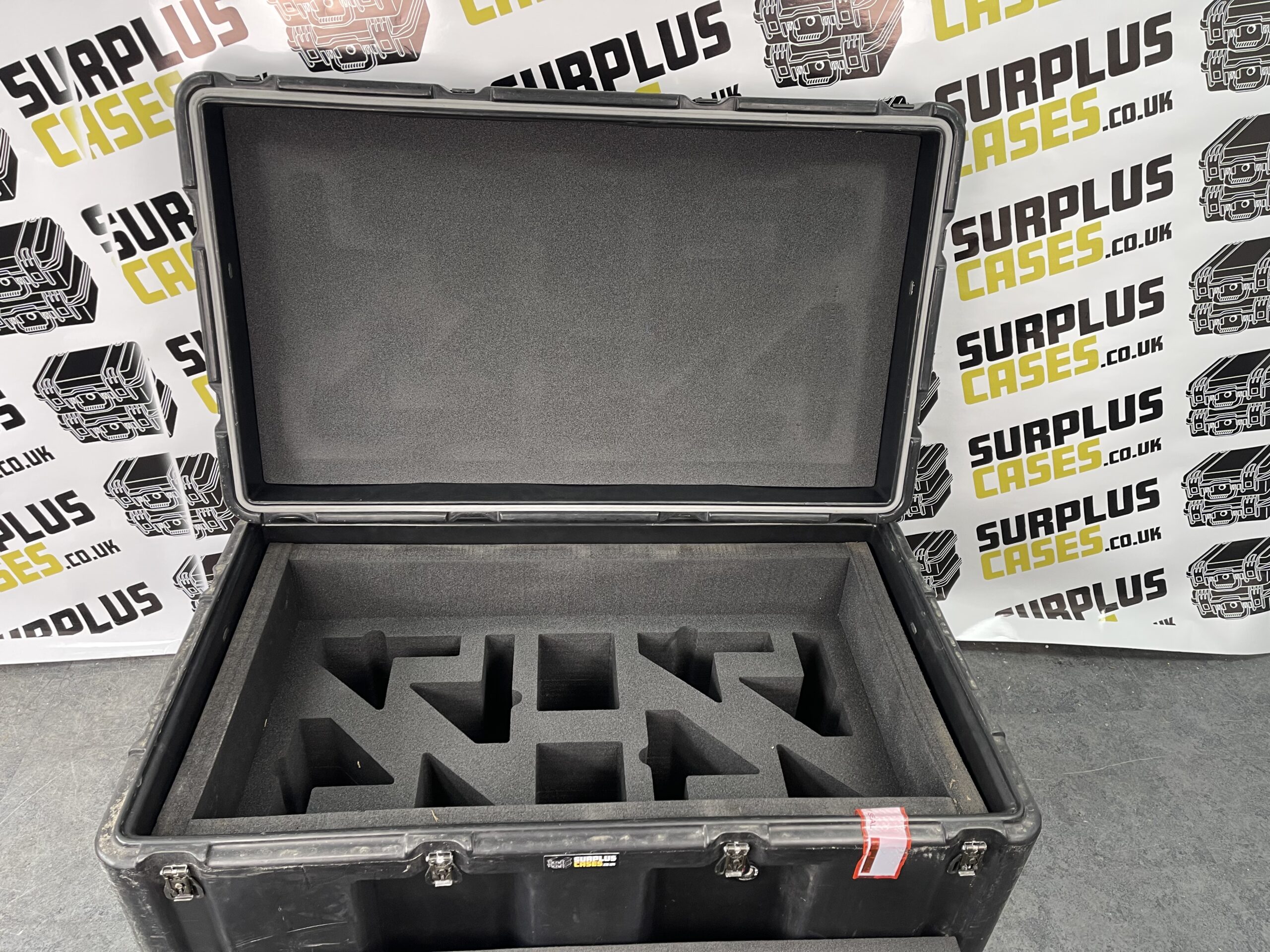
Factory Pick N Pluck uses a solid PE base with a pre-scored 25mm cube grid above. Cubes are removed by hand to create equipment pockets. For simple, blocky shapes it is quick and adequate. For irregular equipment profiles or anything with protrusions, the jagged cube walls produce poor fitment. Custom-cut solid foam consistently provides better results and less equipment movement than Pick N Pluck for the same foam thickness. Score the pocket boundary edges with a craft knife before removing cubes — this creates a defined cut face rather than the ragged edge that comes from tearing.
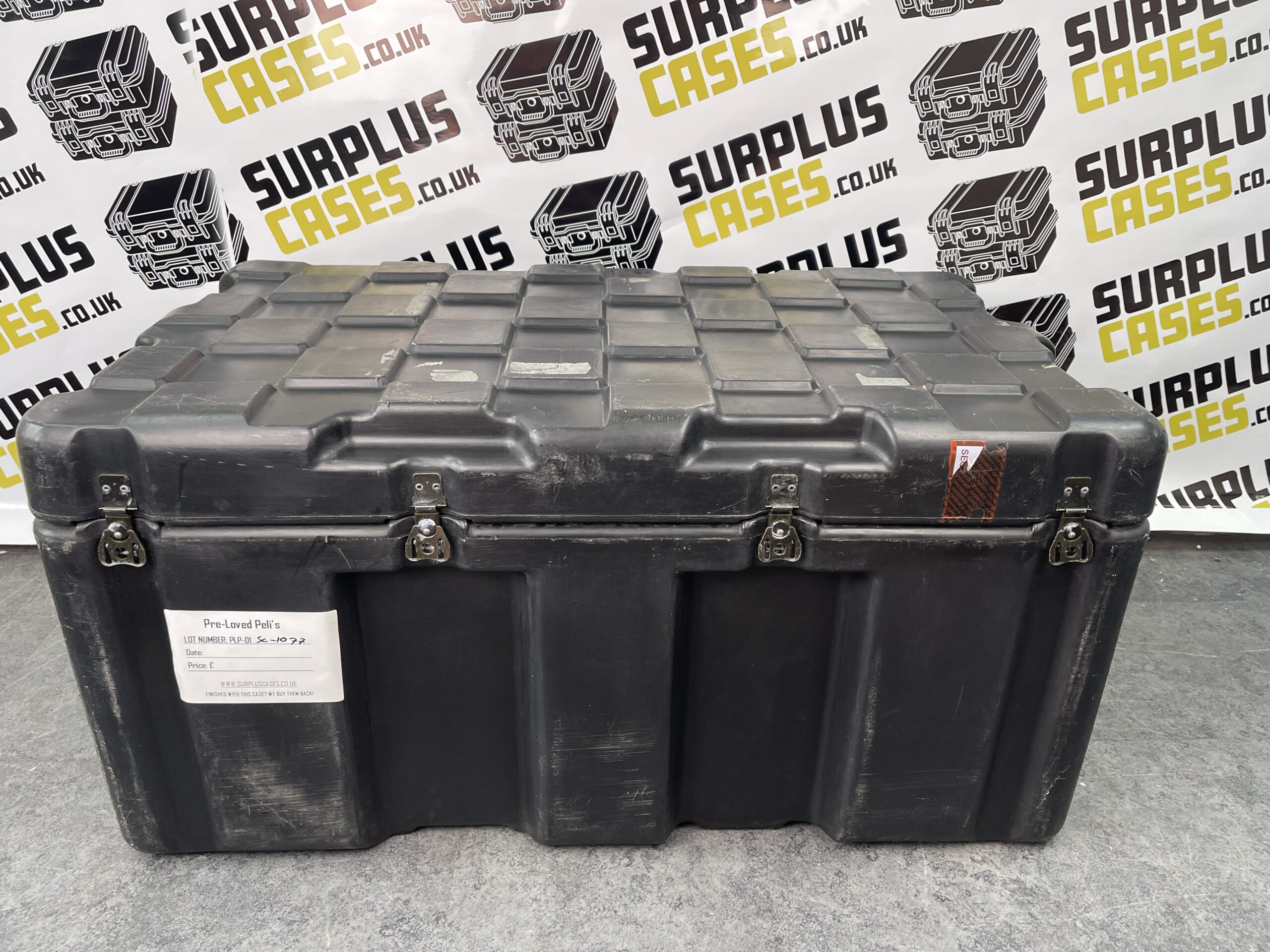
Who Cuts Foam Inserts for Ex-Military Cases?
The foam insert market for surplus military cases spans a wide range of buyers and applications, all sharing the same core requirement: a precisely fitted interior that eliminates equipment movement and provides reliable impact protection.
Photographers and videographers are the most frequent custom foam buyers. A well-cut foam insert in a surplus Peli 1510 or 1620 provides camera body, lens, and accessory protection equivalent to purpose-built camera cases at significantly lower combined cost, with genuine IP67 waterproofing rather than the splash resistance of padded camera bags.
Drone operators and UAV professionals cut foam for commercial drone cases — DJI Mavic, Matrice, and FPV builds — where the exact positions of batteries, controllers, and delicate gimbal assemblies must be fixed to prevent shifting under the vibration and impact of vehicle transport.
Electronics and test equipment engineers re-foam surplus Peli and Hardigg cases for oscilloscopes, calibration instruments, and test rigs. Anti-static foam is standard here, cut to the precise profile of the instrument and its accessories. Ex-military cases at £80–180 represent a substantially cheaper base than new purpose-built equipment transit cases.
Military and blue-light equipment managers maintain, re-foam, and redeploy surplus cases rather than procuring new. Re-foaming a serviceable case shell costs a fraction of replacement procurement, and MoD-standard PE foam in 50mm panels is readily available through UK foam fabrication suppliers.
Overlanders and expedition teams cut foam for recovery tools, communications equipment, and power banks — treating ex-military cases as durable vehicle-mounted storage that must survive rough tracks, river crossings, and long-distance overland travel where unsecured equipment is a reliability risk.
Cutting Methods: Which Is Right for Your Project?
Four practical cutting methods cover the full spectrum from one-off hobby projects to precision production work. Choosing the right method depends on cut complexity, required quantity, and the acceptable tolerance for your application.
| Method | Best For | Precision | Cost | Equipment Required |
|---|---|---|---|---|
| Craft / Stanley knife | Single inserts, straight-edged shapes, PE foam | Moderate | Negligible | Sharp blade, metal rule, cutting mat |
| Electric carving knife | Freehand curved cuts, PU foam, faster throughput | Good | ~£20–35 | Electric knife, card template |
| Hot wire cutter | Clean curved profiles, PE foam, regular production | Very good | £30–80 | Hot wire table, metal template |
| CNC routing service | Exact dims, complex shapes, multiple identical inserts | Excellent | £20–80+ per insert | None — outsourced |
For most buyers cutting a single foam insert for a Peli 1510 or 1620, an electric carving knife with a careful cardboard template produces results close to a professional finish at minimal cost. Hot wire cutters are the tool of choice for operators cutting foam regularly — the investment pays back quickly over multiple inserts. CNC routing is cost-effective for three or more identical inserts and the only practical method for complex organic profiles that cannot be hand-cut accurately.
Looking for ex-military cases from UK military surplus? We stock a carefully selected range, individually inspected and accurately graded. Browse current stock →
How to Cut a Foam Insert: Step-by-Step Guide
Whether you are cutting replacement foam for a Peli 1510 or a large Hardigg transit case, the same process produces reliable results. The two most common failure modes — pockets too tight that stress equipment on removal, and pockets too loose that allow movement in transit — are both prevented by accurate measurement before touching the foam. Sourcing case-grade PE from a UK foam supplier before you begin is equally important: craft foam and upholstery foam are not adequate substitutes and will compress permanently within weeks of use.
Step 1 — Measure the case interior accurately. Measure internal length, width, and depth at multiple points. Ex-military cases sometimes have slightly warped lids or compressed perimeter ridges that reduce usable foam dimensions below the nominal internal spec. Note any internal fittings or latch protrusions that reduce foam depth at the edges of the base layer.
Step 2 — Measure equipment in its packed configuration. Measure each item at its widest point in all three axes. For items with irregular protrusions — battery contacts, lens barrels, antenna stubs — trace the actual footprint onto card to create an accurate cutting template. Add 3–5mm clearance on each lateral face: tight enough to prevent lateral movement, loose enough to allow removal without prying or inverting the case.
Step 3 — Plan the insert layout before cutting. Arrange equipment templates on a sheet of card cut to the case’s internal dimensions. Leave at least 15mm of foam wall between adjacent equipment pockets — thinner walls risk tearing during repeated use. Confirm everything fits in card before committing to foam. If items are tight, reconsider the layout rather than reducing wall thickness below 12mm.
Step 4 — Cut in two separate layers. For a standard 100mm foam block, cut a 50mm base and a 50mm top separately. Use the base layer as the equipment pocket layer — trace templates onto the top face and cut pockets to equipment depth, leaving the base slab intact as a cushion floor. The lid foam layer can then be replaced independently when worn, extending the serviceable life of the whole insert at minimal cost.
Frequently Asked Questions
What foam do Peli cases use from the factory?
Peli cases ship from the factory with closed-cell polyethylene (PE) foam in one of two formats: solid foam blocks requiring hand cutting, or Pick N Pluck — a pre-scored PE grid where individual 25mm cubes are removed by hand to create equipment pockets. The PE used in Peli cases is typically 33–38 kg/m³ density, providing good impact absorption while maintaining dimensional stability under load. Lid foam is usually a separate, thinner layer of flat or convoluted PE. Ex-military versions sometimes have replacement foam in PU or anti-static material fitted during service — check the actual foam material before reusing or cutting over it, as the correct material for your equipment may differ from what was previously installed.
How do I cut Pick N Pluck foam neatly without jagged edges?
The cleanest results from Pick N Pluck come from scoring rather than tearing. Score the entire perimeter boundary of the pocket with a sharp craft knife before removing any cubes — this creates a defined vertical cut face rather than the ragged edge that tearing produces. Use a long metal rule to keep scoring lines straight on rectangular pockets. After removing cubes, use a serrated knife or electric carving knife to trim any cube remnants flush with the pocket floor. The pocket will still be less precise than a solid-foam cut, but for equipment with regular rectangular profiles this method produces a substantially cleaner result than tearing cubes without prior scoring.
Where can I buy replacement foam for a Peli case in the UK?
Several UK sources stock case-grade replacement foam. Pelican Products UK (Peli’s official UK distributor) supplies replacement foam panels for standard civilian case models. UK foam fabrication suppliers — including Foam Factory, Simply Foam, and Foamology — stock cut-to-size PE, PU, and anti-static foam panels that can be ordered to case-specific dimensions at modest cost. For ex-military cases with non-standard internal dimensions — Hardigg and military-configured Peli cases often differ slightly from civilian equivalents — ordering a custom-cut panel to your measured dimensions is more reliable than buying a standard replacement and trimming to fit. Specify foam type (PE, PU, or anti-static), density (kg/m³), and finished dimensions when ordering.
What thickness of foam do I need for a Peli case insert?
Standard Peli case foam runs 50mm per layer — typically a 50mm base block below the equipment and a 25–50mm lid layer above, totalling 75–100mm for most case depths. For equipment with a high centre of gravity or irregular weight distribution, a deeper base (75mm) and thinner lid (25mm) provides better stability in transit. For compact, dense equipment such as camera lenses, a 50mm base and 25mm lid is usually correct. Always measure the case’s actual internal depth and confirm your foam dimensions leave 5–10mm of compression space when the lid is closed — the gasket must seat fully without being forced by an oversized foam stack, or waterproof integrity is compromised.
Can I use foam from a hardware shop or craft supplier?
In most cases, no. Craft foam and household upholstery foam are typically low-density open-cell materials that compress permanently under repeated load and absorb moisture readily. Neither provides adequate protection for equipment heavier than very light items, and both degrade noticeably within weeks of regular use. The correct materials are case-grade closed-cell PE for most equipment, open-cell PU for delicate lightweight items, or anti-static foam for electronics — all available from specialist UK foam suppliers at modest cost. The price difference between craft foam and case-grade PE is small; the performance difference is substantial. Using the wrong foam in a £120 surplus Peli case to protect £1,000+ of equipment is a false economy that most buyers only make once.
Browse Ex-Military Cases at Surplus Cases
Our ex-military case stock is sourced directly from MoD and verified government disposal channels. All cases are individually inspected before listing — latches, gasket, and body condition are checked and accurately described. Foam condition is noted explicitly: we flag worn, compressed, or missing foam and price each case accordingly. Cases listed without usable foam are priced to reflect that a replacement insert is required; cases listed with serviceable original foam may need no immediate foam work at all.
Many buyers purchase our ex-military Peli and Hardigg cases specifically to cut custom foam inserts — this is exactly what these cases are designed to accommodate. Cases that arrive without serviceable foam are available at lower prices and represent strong value for buyers who intend to cut their own inserts. We dispatch from our UK warehouse within 1–2 working days and can advise on internal dimensions for any case in current stock.
Ready to Find Your Ex-Military Case for Foam Cutting?
Ex-military Peli and Hardigg cases sourced from MoD disposal — individually inspected and accurately described. Save 50–70% vs new, then add a custom foam insert for the perfect fit.