
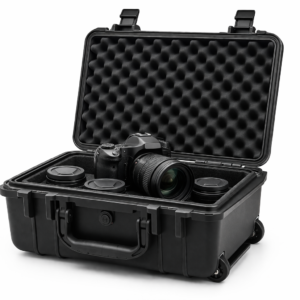
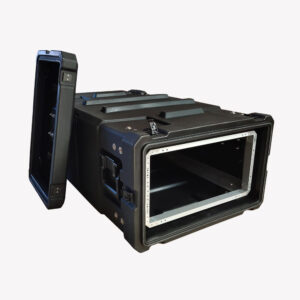

If you have come across the name Peli Hardigg and wondered what it means, you are not alone. The Hardigg name appears on some of the most capable protective cases in the military surplus market, and understanding the history and construction of Peli Hardigg cases will help you recognise them and appreciate why they are worth seeking out. This guide covers the Hardigg story, how these cases differ from standard Peli, and what to look for when buying from UK surplus.
Browse Peli Hardigg Cases
Military-sourced, individually inspected, and accurately described. Fast UK dispatch.
Who Is Hardigg?
Hardigg Industries was founded in Massachusetts in the 1950s and became one of the leading manufacturers of military-grade protective cases in the United States. The company developed deep expertise in rotational moulding — a process that produces thick-walled, seamless plastic cases with exceptional structural integrity. Hardigg cases were adopted by the US military across multiple branches and became a standard for mission-critical equipment transport.
The company was acquired by Peli Products (then Pelican Products) in 2001, and the combined entity became Peli-Hardigg, with Hardigg’s manufacturing capabilities complementing Peli’s existing injection-moulded case range. Today, the Storm and iM series cases produced under the combined company continue to carry the Peli name, while some legacy Hardigg cases still carry the original Hardigg branding.
How Are Hardigg Cases Different?
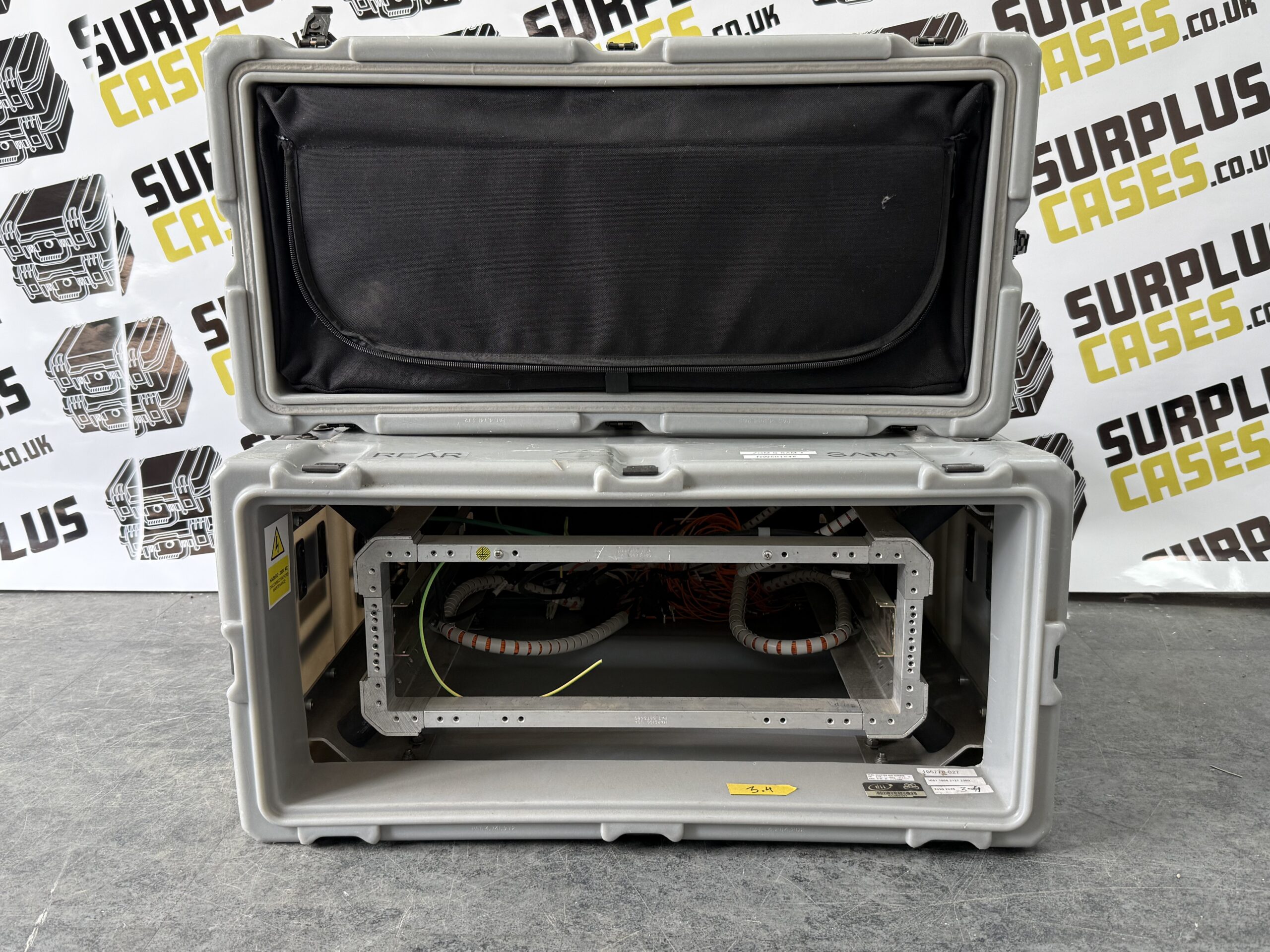
The key difference is the manufacturing process. Standard Peli cases are injection-moulded, which produces precise dimensions and a smooth finish but with wall thicknesses that are optimised for weight. Hardigg cases were rotationally moulded, which produces thicker, denser walls and a more rounded case geometry. The result is a case that is exceptionally resistant to impacts and crushing loads — often cited as tougher than standard injection-moulded equivalents at the same size.
Rotational moulding also produces seamless construction: there are no parting lines or weld marks where two halves of a mould meet. This contributes both to structural strength and to the characteristic rounded appearance of Hardigg cases. Hardigg cases also tend to be heavier than standard Peli cases, reflecting the greater volume of polymer in their construction — but this weight translates directly into greater protection.
Peli Standard vs Peli Hardigg vs Peli Military: Key Differences
The three main categories of Peli case you will encounter in UK surplus each have distinct characteristics. Here is how they compare.
| Feature | Peli Standard | Peli Hardigg | Peli Military |
|---|---|---|---|
| Wall thickness | Standard (optimised for weight) | Thick (rotationally moulded) | Thick + reinforced |
| Hardware | Standard stainless steel | Recessed, heavy-duty | Recessed, mil-spec rated |
| IP rating | IP67 | IP67 | IP67 + MIL-SPEC |
| Weight | Lighter | Heavier | Heaviest |
| Surplus availability in UK | High | Moderate (via US/NATO channels) | Lower |
Recognising Peli Hardigg Cases
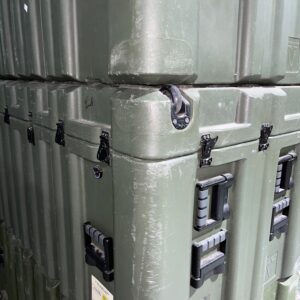
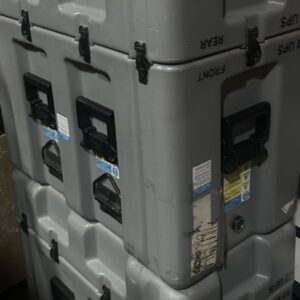
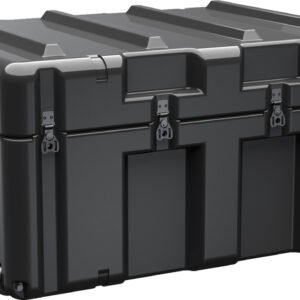
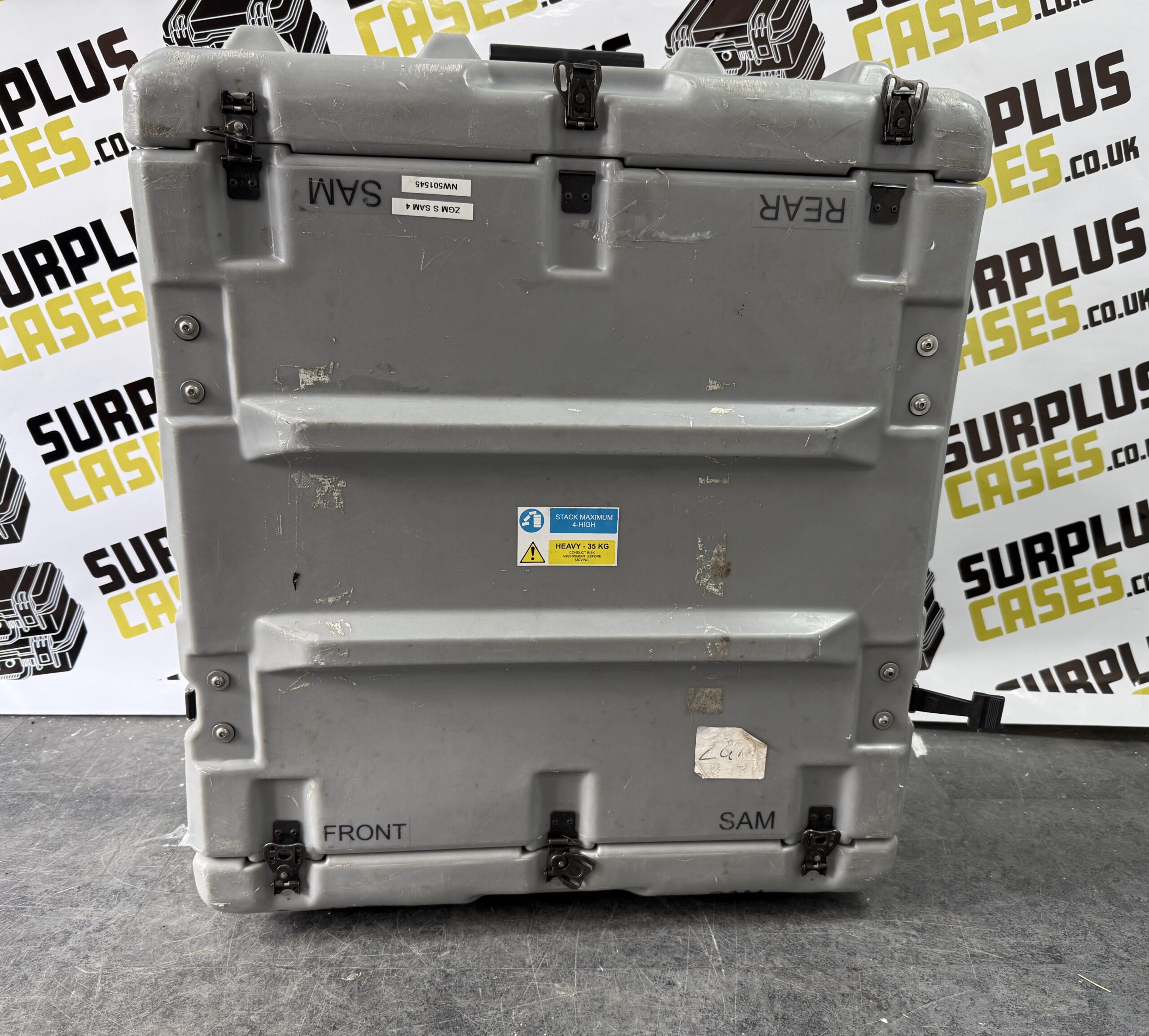
Hardigg cases typically have a more rounded appearance than standard Peli cases, with a distinctive ribbed texture on the outer shell from the rotational moulding process. They often carry US military NSN (National Stock Number) markings and may be marked with “Hardigg”, “Peli-Hardigg”, or simply “Pelican” depending on when they were manufactured.
The most common Hardigg cases in the UK surplus market are large transit cases that entered the UK through US military presence in Britain or NATO disposal channels. They tend to appear in grey, olive drab, or black, and often carry stencilled military markings that identify their original unit or application. These markings do not affect functionality but do add to the provenance and character of the case.
Who Uses Peli Hardigg Cases?
The primary buyers of Peli Hardigg cases from surplus are those who need the maximum level of protection and are willing to accept the additional weight that comes with it. Scientific research teams use them for field instruments where a dropped case could mean the loss of irreplaceable samples or data. Military contractors and government agencies continue to use Hardigg cases in deployable systems. Film and broadcast productions value the larger Hardigg transit cases for protecting camera and lens packages on difficult shoots.
Are Peli Hardigg Cases Worth Buying?
Yes — particularly for applications where maximum impact resistance is the priority. The thicker walls and heavier construction of Hardigg cases provide a higher level of protection against crushing and drops than standard Peli equivalents. The trade-off is weight, but for static storage or vehicle transport where the extra mass is acceptable, a Hardigg case offers outstanding protection.
They are also often available at lower prices than equivalent standard Peli cases due to lower name recognition among buyers who are unfamiliar with the Hardigg history. Buyers who know what they are looking at can secure exceptional value. If you find a Hardigg case in good condition, it represents a better protective case than a standard Peli of comparable external dimensions, at a similar or lower price.
Frequently Asked Questions
Are Peli Hardigg cases still made?
Yes — Peli (now part of the Peli-Hardigg entity) continues to produce cases using rotational moulding technology for military and government customers. The Hardigg brand name appears on some current production cases, particularly those produced for US military contracts. However, most Hardigg-branded cases available on the UK surplus market are legacy stock from US and NATO military disposals rather than current production units.
Can I get replacement parts for a Peli Hardigg case?
Peli produces replacement O-rings, latches, and hinges for most of their case range, and many of these parts are compatible with Hardigg cases produced after the 2001 acquisition. For older pre-acquisition Hardigg cases, parts availability is more limited, but latches, hinges, and O-rings from compatible Peli models often fit. The simplest approach is to contact Peli’s UK distributor with the case model number for a parts compatibility check.
How do I tell a Peli Hardigg case from a standard Peli?
Look for the rounded profile and ribbed outer texture that characterises rotational moulding. Standard Peli cases have a flatter outer surface and sharper edges from the injection moulding process. Hardigg cases also tend to have recessed hardware — handles and latches sit flush with or below the outer shell rather than protruding. On the interior, look for the Hardigg or Peli-Hardigg moulded logo. US military NSN tags and the absence of a Pelican product sticker are also good indicators of Hardigg origin.
What sizes do Peli Hardigg cases come in?
Hardigg cases were produced in a very wide range of sizes, from small instrument cases roughly equivalent to a Peli 1510 up to large transit containers capable of shipping rack-mount equipment. The most commonly seen sizes in UK surplus are mid-to-large cases in the 600mm–800mm range, reflecting the typical military logistics application. Very large Hardigg transit cases — sometimes 1.2m or more on their longest dimension — occasionally appear in NATO military surplus channels.
Ready to Find Your Peli Hardigg Case?
We stock Peli Hardigg cases sourced from UK and US military disposals — heavier-duty than standard Peli and often available at lower prices. All cases pre-inspected and accurately described.
✓ All cases pre-inspected
✓ Accurate condition descriptions
Can’t find what you need? Get in touch