

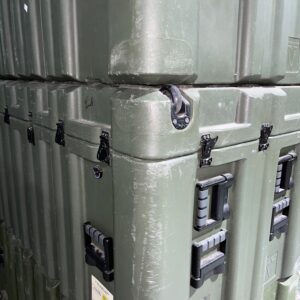
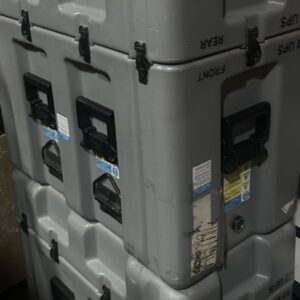
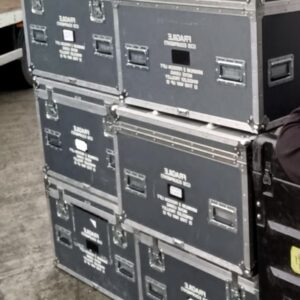
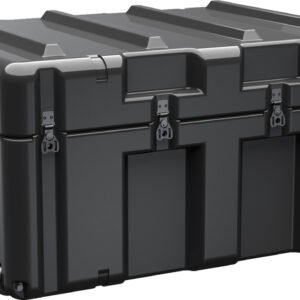
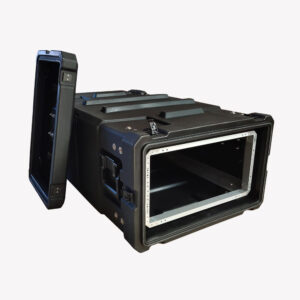

Touring musicians have always faced the same problem: expensive instruments and equipment that must survive repeated loading, transit in vehicles and aircraft, and unloading at venues — often late at night, often in the rain, sometimes handled by people who do not share your enthusiasm for gear preservation. Flight cases for touring musicians need to be genuinely tough, and ex military flight cases have become a go-to solution for bands and crews who have learned that commercial music cases rarely survive more than a few tours intact.
Heavy-Duty Flight Cases from UK Military Surplus
Military-sourced, individually inspected, and accurately described. Fast UK dispatch.
Why Commercial Music Cases Fall Short
Most commercially available music flight cases are built to a retail price point rather than a performance standard. The plywood is thinner, the aluminium cladding is lighter gauge, the hardware is lower-rated, and the foam compresses more quickly under repeated use. A case that looks solid in a music shop can show its limitations after a dozen shows — cracked corners, broken latches, and delaminating shells are common complaints.
For occasional use, some compromise in build quality may be acceptable. For touring musicians doing hundreds of shows a year — loading into transit vans, flying as checked cargo, stacked in venue storage — case failure is a practical and financial problem. Replacing a commercial case every two or three years is not only expensive; it is disruptive when a case fails mid-tour and replacements need to be sourced urgently.
How Ex Military Flight Cases Are Built Differently
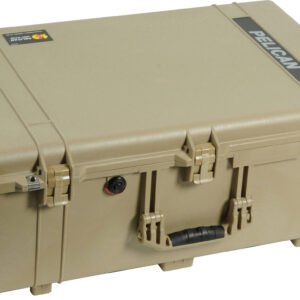
Ex military flight cases were built to government specifications where failure was not an option. They were designed to protect sensitive electronics, communications equipment, and precision instruments in active operational environments — conditions considerably more demanding than a tour bus or airport baggage hall.
The construction reflects that. The plywood core is typically 9mm or thicker, high-grade birch or ply rather than the cheaper alternatives used in retail cases. The aluminium cladding is heavier gauge, and the riveted construction creates a case that remains rigid even under significant compressive load. Corner protectors are structural rather than decorative — they are the same extrusion depth on all faces and rated for real impacts. Latches are rated for thousands of cycles. The foam lining, where present, is higher density than typical commercial equivalents and holds its shape after years of use.
The result is a case that genuinely does what touring demands of it, even after years of hard use. Many touring engineers report military cases still performing well a decade or more after purchase, long past the point where a commercial equivalent would have needed replacement.
The Cost Argument
A good commercial flight case for a guitar amplifier or keyboard can cost £150 to £300 or more new. A high-quality ex military flight case of similar size from the surplus market often costs considerably less, while offering superior construction. For a touring band that needs cases for multiple instruments, amplifiers, effects racks, and merchandise, the saving across a full case specification can be substantial.
The long-term cost of ownership matters too. Military cases are built to last decades. When you buy a commercial case, you are often buying something that will need replacing in three to five years. When you buy a military surplus case in good condition, you are buying something that may well outlast your touring career. The capital cost is lower and the replacement cost is effectively zero.
Matching Cases to Instruments and Equipment
Different instruments and pieces of touring equipment have very different case requirements. Size, weight, interior protection, and stackability all vary significantly depending on what you are transporting. The table below gives a practical guide to choosing the right type of case for the most common touring loads.
| Equipment | Recommended Case Type | Key Requirements | Typical Size Needed |
|---|---|---|---|
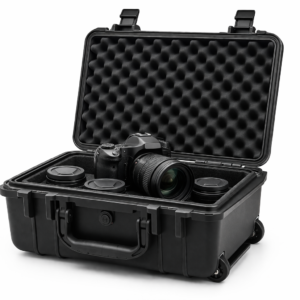
| Electric guitar / bass | Compact flight case with foam | Foam-lined, secure latch, recessed hardware | ~120 × 40 × 15 cm interior |
| Keyboard / synthesiser | Large rectangular flight case | Rigid lid, stackable, handles on short ends | ~140 × 50 × 20 cm interior |
| PA speakers | Heavy-duty transit case or flight case | Load-bearing, stackable, rubber feet | Varies — measure unit + 5 cm clearance |
| Effects rack / outboard | Rack flight case (19" standard) | 19" rail compatibility, internal depth | Match rack unit height + spare depth |
| Lighting rigs / fixtures | Large military transit case | Volume, stackable, secure lid, handles | Large format — Zarges K470 equivalent |
| Cables and accessories | Small to medium flight case | Open interior, lightweight, stackable | 40–60 cm cube equivalent |
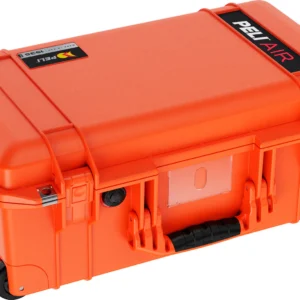
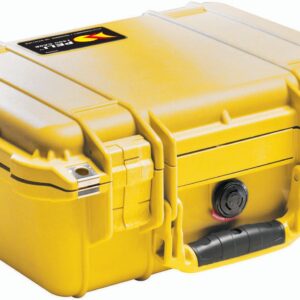
| Laptop / audio interface | Compact waterproof case (Peli-type) | IP67 waterproof, foam-lined, lightweight | Peli 1510 / 1560 equivalent |
What to Look for When Buying
The most important checks for touring use are latches (they should operate firmly and lock securely), corner protectors (all should be tight with no loose rivets), and foam condition (interior foam takes the most wear and should be assessed carefully). A case with worn foam can still work well if you replace the lining — foam inserts are inexpensive and easy to cut to shape.
Check the external dimensions against your equipment needs, allowing enough internal clearance for foam lining and padding. Note whether the case has recessed hardware — recessed butterfly latches and handles are less prone to catching on vehicle floors and doorframes during touring. Cases with stacking feet are preferable where you will be stacking multiple units.
Also check hinge integrity along the full length of the case. Military cases sometimes see heavy use on hinges as lids are repeatedly opened flat. Any cracking or separation along the hinge line is worth examining closely before purchase. At Surplus Cases, condition grading notes significant issues of this type.
Frequently Asked Questions
Can ex-military flight cases be used as aircraft checked baggage?
Many musicians use military flight cases for checked cargo, and they handle the baggage hold environment well. The key consideration is weight: military cases are built to military specifications rather than airline weight limits, so they can be heavier than purpose-built airline cases. Check total weight (case plus contents) against the airline’s checked baggage limit before booking. For instruments going into the hold, it is also worth noting whether the case has a pressure valve — some military cases do, others do not. A case without a pressure relief mechanism can develop positive or negative pressure at altitude, making it difficult to open on arrival.
How do I know what size case I need for my instrument?
Measure your instrument or equipment at its widest, longest, and deepest points, then add at least 30–40mm on each dimension for foam lining and packing clearance. For foam-lined cases, you want the instrument to sit securely without compressing the foam too tightly. The table above gives approximate interior dimensions for common instruments as a starting point. If in doubt, buy slightly larger — a case that is 10% too big is far more useful than one that is 5% too small.
Are ex-military cases suitable for touring internationally?
Yes — military cases are well-suited to international touring. Their construction handles the rough treatment common in international freight and baggage handling, and they are robust enough to survive the handling chain between loading at one airport and arrival at another. Some musicians also appreciate the utilitarian, unmarked appearance of surplus cases on international freight — a battered-looking olive drab case attracts less attention than an expensive-looking branded case. For electronic equipment travelling internationally, a Peli-type waterproof case provides additional protection against humid environments and unexpected exposure to moisture.
What condition are surplus flight cases typically in?
Condition varies, and buying from a seller who grades cases honestly makes a significant difference. Military surplus cases will typically show signs of service: stencilling, paint marks, minor dents, and wear to external surfaces. This is cosmetic and does not affect structural performance. The functional elements — latches, hinges, foam, and corner integrity — are what matter for touring use. At Surplus Cases, all stock is inspected individually and described by condition, and we photograph significant wear or damage so buyers know exactly what they are getting.
Ready to Find Your Case?
We stock a range of ex-military flight cases built to outlast any tour — inspected, accurately graded, and dispatched fast from the UK. Browse current stock or get in touch if you need advice on sizing.
✓ All cases pre-inspected
✓ Accurate condition descriptions
Can’t find what you need? Get in touch