

Walk onto any serious military set and you will see them immediately — stacked against walls, wheeled through corridors, piled in vehicle load bays, racked in operations rooms. Military cases are not background noise on a production: they are a defining visual element of every contemporary military, espionage, and defence-adjacent story. Get them right and the set feels operational. Get them wrong and everything else suffers. This guide is written for production designers, prop buyers, and set decorators who want to understand the taxonomy of genuine military cases and make informed sourcing decisions.

The Case Taxonomy: What You’re Actually Looking At
Military cases fall into several distinct categories, each with its own visual signature, period associations, and operational context. Understanding the differences matters for accurate set dressing.
Hard Polymer Cases (Peli / Hardigg)
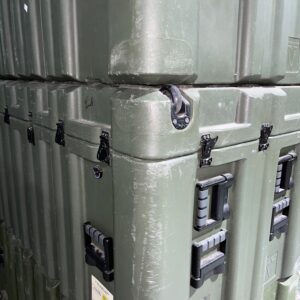
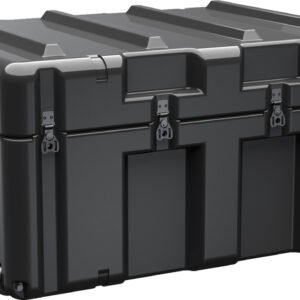
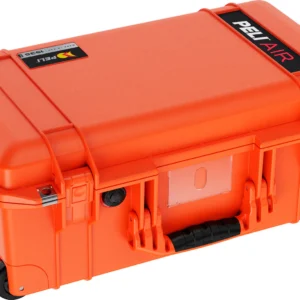
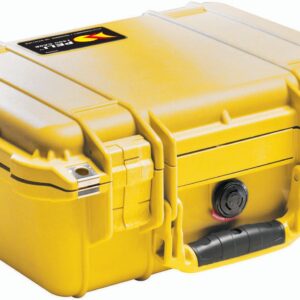
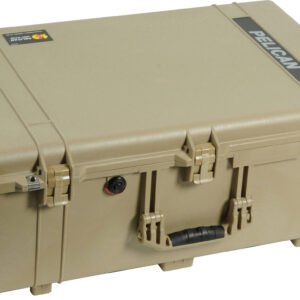
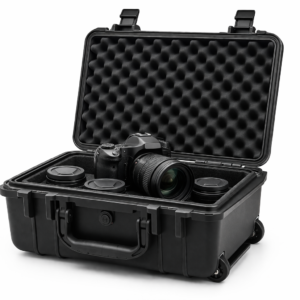
The modern military standard. Peli (sold as Pelican in the US market) and Hardigg cases are the polymer hard cases used by US and UK forces from the 1990s through to the present day. They are waterproof, crushproof, and immediately recognisable from their distinctive double-throw latches and ribbed polymer shell. Military procurement versions differ from civilian retail in subtle but camera-visible ways: NSN (National Stock Number) stickers, NATO cage code markings, unit stencilling, and in some cases unique hardware configurations. These are the cases you need for anything set in the post-Gulf War period.
British Military Aluminium Cases (Zarges)
The Zarges aluminium case is one of the most distinctively British pieces of military kit in existence. The ribbed aluminium construction, butterfly catches, and olive drab or unpainted finish have appeared in British military service since the Cold War era and remain in use today. For anything with a British military flavour — particularly from the 1970s through present — Zarges cases are a visual shorthand that audiences and technical advisors will immediately recognise and respect.
Military Flight Cases
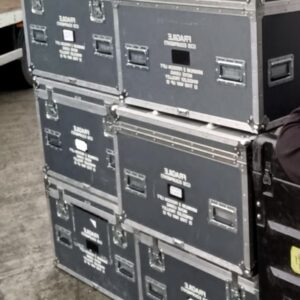
Plywood-and-aluminium construction, recessed butterfly latches, foam-lined interiors. Military flight cases have a slightly older visual register than polymer cases — they read as early Cold War through to the 2000s — but they remain in active military use for certain equipment types and appear across a huge range of productions. Their size range, from compact carry cases to large transit units, makes them extremely versatile for set dressing across multiple scene types. Many retain original stencilling that adds significant production value.
Rack Mount and Server Cases
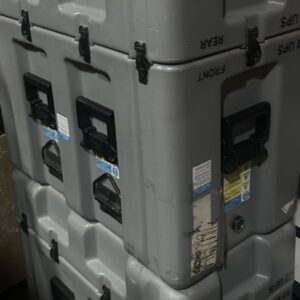
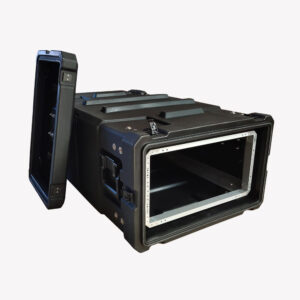
Military communications and computing equipment was transported and operated in specialised rack cases — hard polymer or aluminium cases with integrated 19-inch rack frames. These are among the most visually specific and least commonly sourced items in military set dressing. An operations room dressed with genuine rack cases reads completely differently from one dressed with generic server equipment. If your script involves SIGINT, communications intercept, field computing, or any form of military technical intelligence operation, genuine rack cases are transformative.

Period Accuracy: A Quick Reference Guide
Period accuracy in military cases is a specialist subject, but the following broad framework covers the most common production scenarios:
| Period | Dominant Case Types | Visual Signature |
|---|---|---|
| Cold War (1950s–1980s) | Wooden transit crates, early aluminium cases, canvas equipment bags | Stencilled wood, olive drab metal hardware, canvas strapping |
| Gulf War era (1990–2003) | First-generation Zarges, early Hardigg polymer cases, flight cases | Tan/green polymer, olive aluminium, NSN markings beginning to appear |
| Post-9/11 modern (2003–present) | Peli/Hardigg polymer cases, Zarges, specialist rack cases | Tan and black polymer, full NSN sticker sets, unit stencilling |
| Contemporary (2015–present) | Peli Storm, modern Zarges, rack cases, specialist comms cases | Mixed tan/black/green, modern hardware, digital asset tracking labels |
What the Camera Sees That You Might Miss
There are details on genuine military cases that replicas and theatrical props consistently miss, and that cameras — particularly in close-up or hero prop situations — will expose.
Hardware patina. Military hardware — latches, hinges, corner protectors — develops a specific pattern of wear that differs from theatrical aging. The wear concentrates on contact surfaces in ways that replicate use rather than decorative distressing. This is impossible to fake convincingly.
Stencilling type and placement. Military stencilling follows specific conventions — unit identifiers, NSN numbers, weight and dimension markings, hazmat warnings — that differ by service branch, nationality, and era. Incorrect or generic stencilling will be noticed immediately by any technical advisor or viewer with military experience.
Foam interior configuration. Military cases are fitted with foam configured for specific equipment. A case that contained communications equipment will have a different foam layout from one that contained optical instruments. These details are visible in open-case shots and add significant authenticity when correct.
Weight and handling. This matters for your cast and background performers. Genuine military cases handle differently from empty props — the weight distribution, the effort of carrying, and the natural posture adjustments that handling heavy cases produces all read on camera. Using genuine cases with appropriate interior loading is the most efficient way to get authentic physical performance from your performers.

How We Work With Productions
We work with productions at every stage from concept through to wrap. The earlier you involve us the better — not because we need the lead time (though for international shipping it helps), but because the decisions made at the design stage about case type, configuration, and arrangement have a significant impact on what is achievable on budget and on schedule.
Our process is straightforward. You send us your brief — set design references, script breakdown, period and nationality context, quantity requirements. We review it and come back with specific recommendations from our current stock, plus a sourcing plan for anything we need to find. We can work to a fixed budget or to a specification, and we are experienced in both approaches.
We have supplied productions across the UK and internationally, including sets shipped as far as Australia. Our cases travel well — they are, after all, built to survive military logistics — and we handle the preparation, documentation, and shipping coordination so that your transport team does not have to.
Start Your Production Brief Today
Call us on 07985 613222 or email sales@surpluscases.co.uk with your production details. We work with productions of all scales, from single-episode drama to feature film and high-end commercial. If you need genuine military cases that will perform on camera and satisfy the most exacting technical advisor, we are the right supplier.