
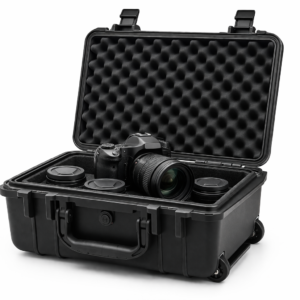
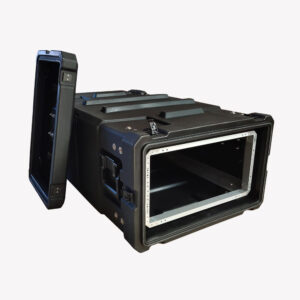

The Peli 1620 vs 1510 question divides equipment buyers more than almost any other case comparison — because the right answer depends entirely on what you need to protect and how you need to travel. Both cases are Peli stalwarts, trusted by military procurement teams, professional photographers, field engineers, and overlanders across the UK and beyond. The 1510 is the iconic carry-on-legal travel case; the 1620 is the serious large-capacity solution for bulky, sensitive kit. Both models appear regularly in UK military surplus, available at 50–70% savings off new retail prices. This guide breaks down exactly what each case offers, who each size suits, and what to look for when buying either model from the UK surplus market.
Browse Used Peli Cases from UK Military Surplus
Military-sourced, individually inspected, and accurately described. Fast UK dispatch.
Understanding the Peli 1620 and Peli 1510
Peli Products — known as Pelican in North America — has been manufacturing protective cases for military, law enforcement, and professional users since the late 1970s. Both the 1510 and the 1620 belong to the 1000 series, sharing the same core engineering: a watertight silicone O-ring seal, crush-resistant polymer shell, automatic pressure equalisation valve, and stainless steel hardware. The differences lie in their intended roles.
The Peli 1510: The Carry-On Champion
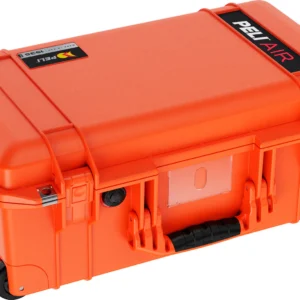
The Peli 1510 was designed around one critical dimension: IATA carry-on limits. At 559mm × 351mm × 229mm external, it fits within most airline overhead lockers on narrow-body aircraft. Its internal capacity of 502mm × 279mm × 193mm (approximately 27 litres) is enough for a laptop setup, a DSLR with two lenses, a set of scientific instruments, or a small firearms component kit in approved configurations. It weighs 4.1kg empty. NATO procurement teams have issued the 1510 widely for personnel laptops and fieldwork equipment, making it one of the most frequently found Peli models in the UK surplus market.
The Peli 1620: Maximum Interior Volume
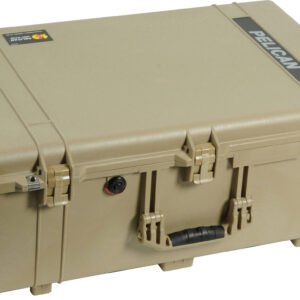
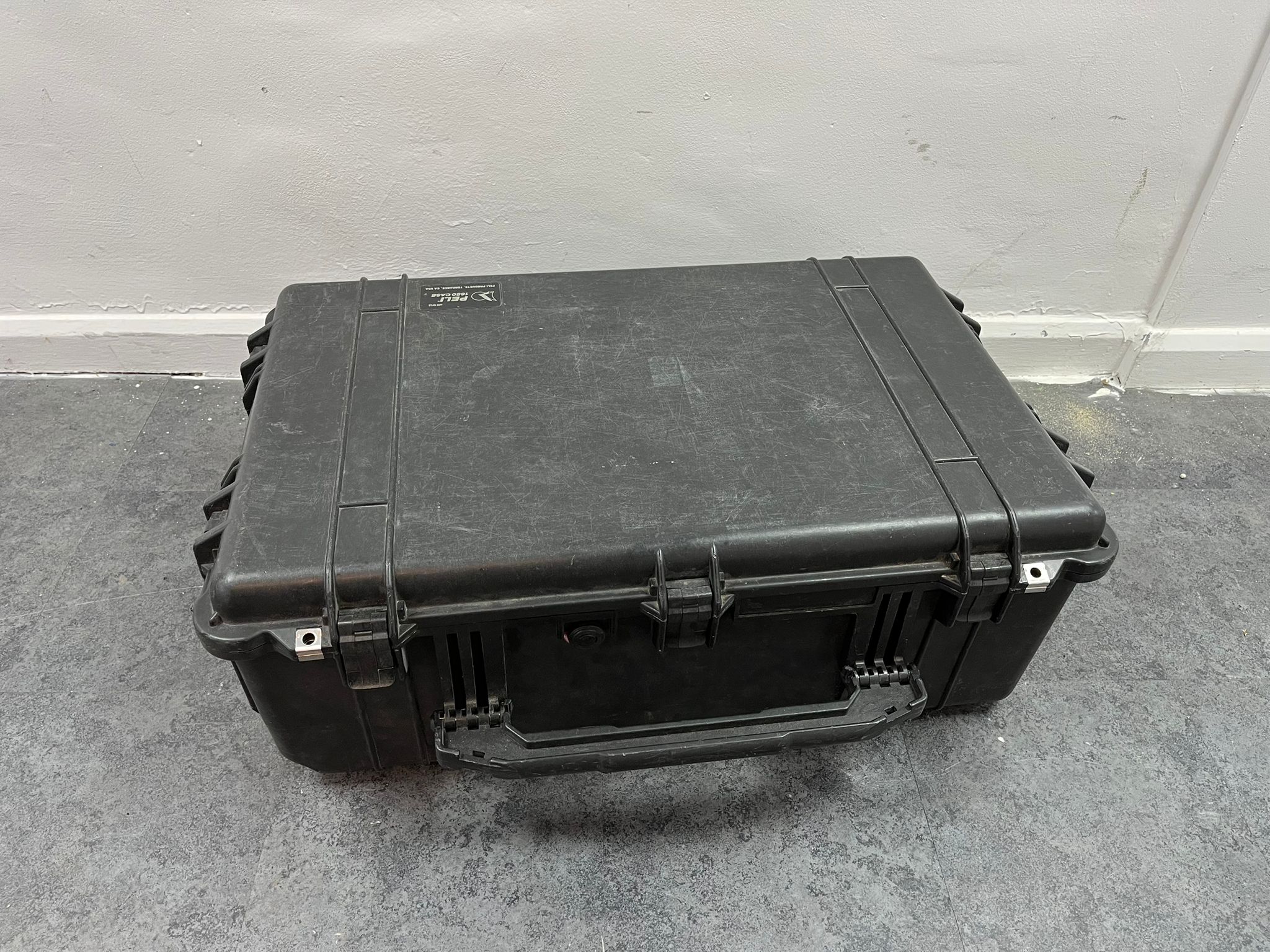
The Peli 1620 is a substantially larger case. External dimensions of 700mm × 527mm × 309mm and an internal volume of 643mm × 470mm × 271mm (approximately 81 litres — three times the 1510’s capacity) make it the right choice when the 1510 simply isn’t enough. It was designed for bulkier, heavier equipment: drone systems, long-lens photography rigs, survey receivers, weapons maintenance kits, and broadcast gear. The 1620 features wheels and a retractable handle, essential for moving loaded cases across tarmac, transit routes, or field environments. Empty weight is approximately 7.7kg.
Military Procurement Background
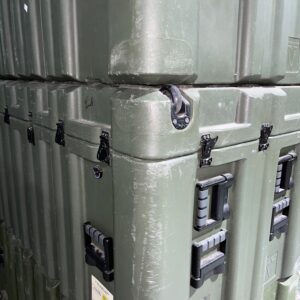
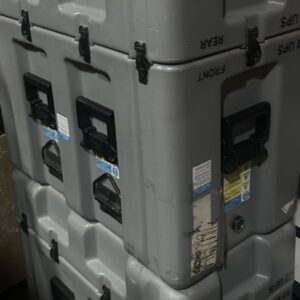
Both cases have been purchased extensively by UK and NATO military procurement teams. The 1510 has been widely issued for individual equipment and laptops; the 1620 appears in survey, signals, and ordinance contexts. Surplus examples typically present as Grade 1 (minimal signs of use) or Grade 2 (normal military wear: scratches, stencilling, minor cosmetic dents), but remain structurally sound with intact seals and functional latches.
Who Should Buy Each Case
The Peli 1620 and 1510 serve distinct buyer groups. Knowing where your requirements fall makes the decision straightforward.
Frequent business and field travellers almost universally choose the 1510. If you’re carrying a laptop, cables, a compact camera, and backup drives on a weekly basis, the 1510 keeps everything secure and compliant with carry-on rules on most major carriers. At £80–£140 surplus versus £200+ new, it’s the most cost-effective protective travel case available in the UK.
Drone operators need to size carefully. A DJI Mini series or Mavic with folded arms can fit a 1510 with a custom foam insert. A DJI Phantom, Autel Evo II, or any agricultural/mapping drone with arms attached requires a 1620 or equivalent. Military surplus 1620s are particularly well-suited: the case was often foam-fitted for equipment of similar dimensions to mid-size commercial drones.
Survey and geomatics professionals carrying total stations, GPS/GNSS receivers, or ground-penetrating radar components will find the 1620 the natural fit. The internal footprint handles a receiver unit plus tribrachs, cables, and accessories without requiring multiple cases.
Photographers and videographers using a cinema rig or long telephoto lenses (300mm f/2.8 or longer) will need the 1620. The 1510 suits a mirrorless kit with two or three primes, but once you introduce a large-aperture telephoto or a video rig with follow focus, the additional volume is essential.
Overlanders and 4×4 adventurers often choose the 1620 for vehicle-based dry storage — it’s large enough for cooking gear, medical supplies, or communications equipment and can be strapped to a rack or loaded into a truck bed without the compromise of a smaller case.
Peli 1620 vs 1510: Head-to-Head Comparison
The table below compares the two cases directly on the specifications that matter most for buyers. Dimensions may vary slightly between production runs and military-specification versus civilian models.
| Specification | Peli 1510 | Peli 1620 |
|---|---|---|
| External dimensions | 559 × 351 × 229mm | 700 × 527 × 309mm |
| Internal dimensions | 502 × 279 × 193mm | 643 × 470 × 271mm |
| Internal volume | ~27 litres | ~81 litres |
| Empty weight | ~4.1kg | ~7.7kg |
| Airline carry-on | Yes (most carriers) | No — checked baggage only |
| Wheels and handle | Yes — telescoping handle | Yes — wheels + retractable handle |
| IP rating | IP67 waterproof | IP67 waterproof |
| Typical surplus price (UK) | £80–£140 | £120–£200 |
| New retail (approximate) | ~£200 | ~£370 |
| Foam pre-fitted (surplus) | Often | Often (custom cut or pick-n-pluck) |
The volume difference between these two cases is not marginal. The 1620 offers roughly three times the interior space of the 1510 — this is a fundamentally different class of case, not simply a “bigger version” of the same tool.
Looking for used Peli cases from UK military surplus? We stock a carefully selected range, individually inspected and accurately graded. Browse current Peli case stock →
What to Look for When Buying a Surplus Peli Case
Buying a used Peli case from military surplus is generally low risk — these cases were engineered for extreme conditions and most surplus examples are structurally sound. There are, however, specific checks worth making before or immediately after purchase.
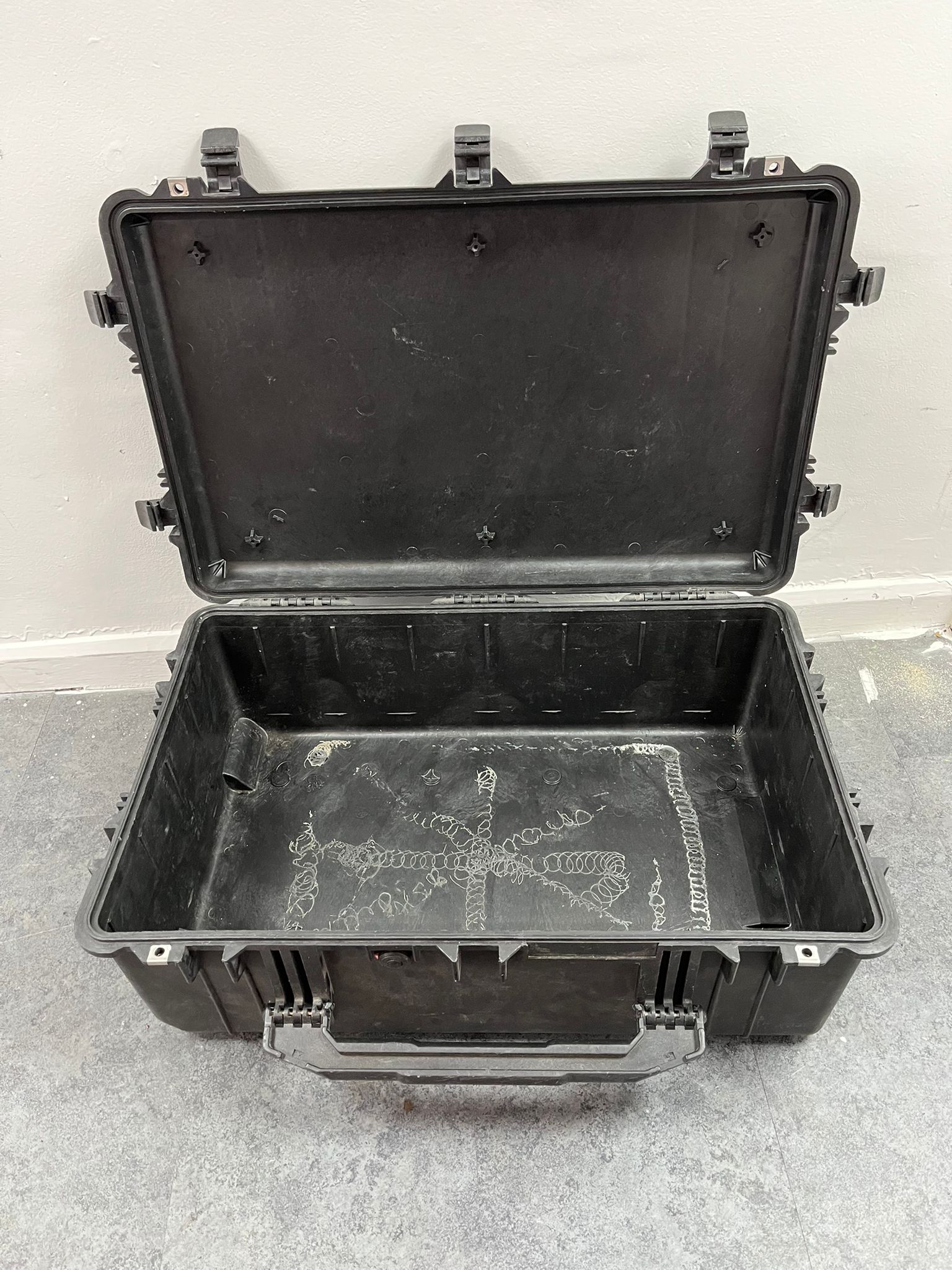
O-ring condition. The watertight seal depends entirely on the lid O-ring. Inspect it for cracking, flattening, compression set, or missing sections. A replacement O-ring is available from Peli UK for under £10, but a compromised O-ring means the case is not currently IP67 — factor this into the price you pay. Professionally graded surplus examples should have O-ring condition explicitly noted.
Latch integrity. Peli double-throw latches should click and hold closed without rattling or releasing under light lateral pressure. Test each latch individually. On a 1620, there are four latches — check all four. Worn latches are replaceable but multiple faulty latches indicate heavy use.
Foam condition. Military-issue cases are often pre-foam-fitted to a specific piece of equipment. If the existing foam cut-out doesn’t suit your kit, replacement is straightforward. Peli replacement foam is widely available, or custom-cut inserts can be commissioned. For detailed guidance on foam modification, see our complete buyer’s guide to ex-military cases.
Hinge condition. Check for stress cracking at the plastic pivot points on the lid hinge. This is more common on older 1620s that have been repeatedly loaded and transported in vehicles.
Stencilling and markings. Military surplus cases frequently carry unit markings, NSN (NATO Stock Number) labels, or stencilled identification. These are cosmetic and can be removed with acetone or acetone-based nail varnish remover, or painted over. Many buyers retain them as provenance markers. For guidance on identifying genuine Peli and Hardigg cases versus close alternatives, our dedicated explainer is useful.
Frequently Asked Questions
How much does a used Peli 1620 or 1510 cost in the UK?
Surplus Peli 1510s typically sell for £80–£140 depending on condition, grade, and whether foam is included. A surplus 1620 in good condition typically costs £120–£200. Compare this to new retail of approximately £200 for a 1510 and £370 for a 1620, and the savings are substantial — typically 50–65%. Condition grading varies between suppliers. Look for itemised descriptions of O-ring, latch, and foam condition rather than vague language like “good used condition.” Suppliers who apply a consistent grading standard (such as Grade 1 or Grade 2) are more reliable. Our used Peli cases UK buyer’s guide covers pricing benchmarks and condition grading in more detail.
Is a surplus Peli case still waterproof?
In the majority of cases, yes. Peli cases are built around a silicone O-ring that compresses when the latches are closed, creating the IP67 waterproof seal (submersible to 1 metre for 30 minutes). This O-ring is highly durable and typically remains functional after years of military use, provided it hasn’t been cut, severely compressed, or left in direct UV exposure for extended periods. However, you cannot assume waterproof status without checking. A practical field test: close the case over a thin sheet of paper folded across the lid seal and attempt to pull the paper free. If it comes out easily, the seal is likely compromised. Professional surplus suppliers should confirm O-ring condition in the listing description.
Can the Peli 1510 be used as genuine airline carry-on?
Yes, with caveats. The Peli 1510 was designed to meet IATA standard carry-on dimensions (56cm × 36cm × 23cm), and it fits within most airline overhead lockers on narrow-body aircraft such as the Boeing 737 and Airbus A320 family. However, some low-cost carriers impose stricter cabin bag limits or weigh carry-on bags, and the 1510 weighs 4.1kg empty — which eats into most carriers’ 10kg limit once loaded. Airline staff also retain the right to refuse any item that appears unusually large or heavy. If you plan to use a 1510 as carry-on regularly, verify the specific rules for your primary carrier. The 1620 at 700mm length is not carry-on compatible under any standard airline policy.
What size Peli case do I need for a drone?
The correct case size depends on the specific drone model. A DJI Mini series (folded) fits comfortably in a 1510 with space for batteries and a controller. A DJI Mavic 3 or Air series with folded arms will also fit a 1510 with a custom foam insert. A DJI Phantom 4 with arms attached, or any Autel Evo II, requires a 1620 or larger. Agricultural or mapping drones (DJI Agras, Matrice series) typically require cases larger than the 1620 altogether — consider our full range of ex-military cases for oversized requirements. When in doubt, measure your drone with all folded components and compare against published interior dimensions before purchasing.
How do I identify a genuine Peli 1620 or 1510 versus a similar-brand alternative?
Genuine Peli cases have several identifying features: the Peli or Pelican name moulded in relief into the shell, a serial number label on the inside lid, a patent number embossed near the hinge, and a pressure equalisation valve on the exterior. Military procurement cases carry additional markings — unit stencils, NSN labels, and sometimes cage codes. There are few convincing counterfeits in the surplus market; most cases described informally as “Peli-style” will be genuine competing brands (SKB, Explorer Cases, Hardigg, Zarges) rather than fakes — and these are legitimate alternatives in their own right. For a comparison of Peli versus Zarges cases and their respective strengths, see our comparison guide.
Browse Used Peli Cases at Surplus Cases
We source Peli and Hardigg cases directly from UK and US military disposal channels, selecting examples that meet our grading criteria before they’re listed. Every case is individually checked for latch function, O-ring condition, foam integrity, hinge condition, and shell integrity — and graded accordingly. We don’t list a case as Grade 1 unless it genuinely presents as near-new; we don’t describe a case as “good used” without backing that up with a specific condition note. Our new vs used Peli cases guide gives an honest breakdown of what to expect from surplus stock versus buying new.
Current Peli stock includes 1510s, 1620s, and a rotating selection of 1560, 1650, and less common models as they arrive from disposal. All stock is held in the UK and dispatched promptly on confirmation.
Ready to Find Your Used Peli Case?
We stock ex-military Peli and Hardigg cases sourced from UK and US military disposals — individually inspected and accurately described. Save 50–70% vs new without compromising on protection.
✓ All cases pre-inspected
✓ Accurate condition descriptions
Can’t find what you need? Get in touch